LLM Streaming Trailer Allowlist for AI Gateways

HTTP trailers arrive after streamed content, which makes them useful for final digests, signatures, delivery metrics, and post-processing status. Their timing also limits what they can safely control. An AI gateway should keep trailers separate from initial headers, accept only fields whose definitions permit trailer use, reject security-sensitive names, and preserve approved metadata only across protocol paths that support it.
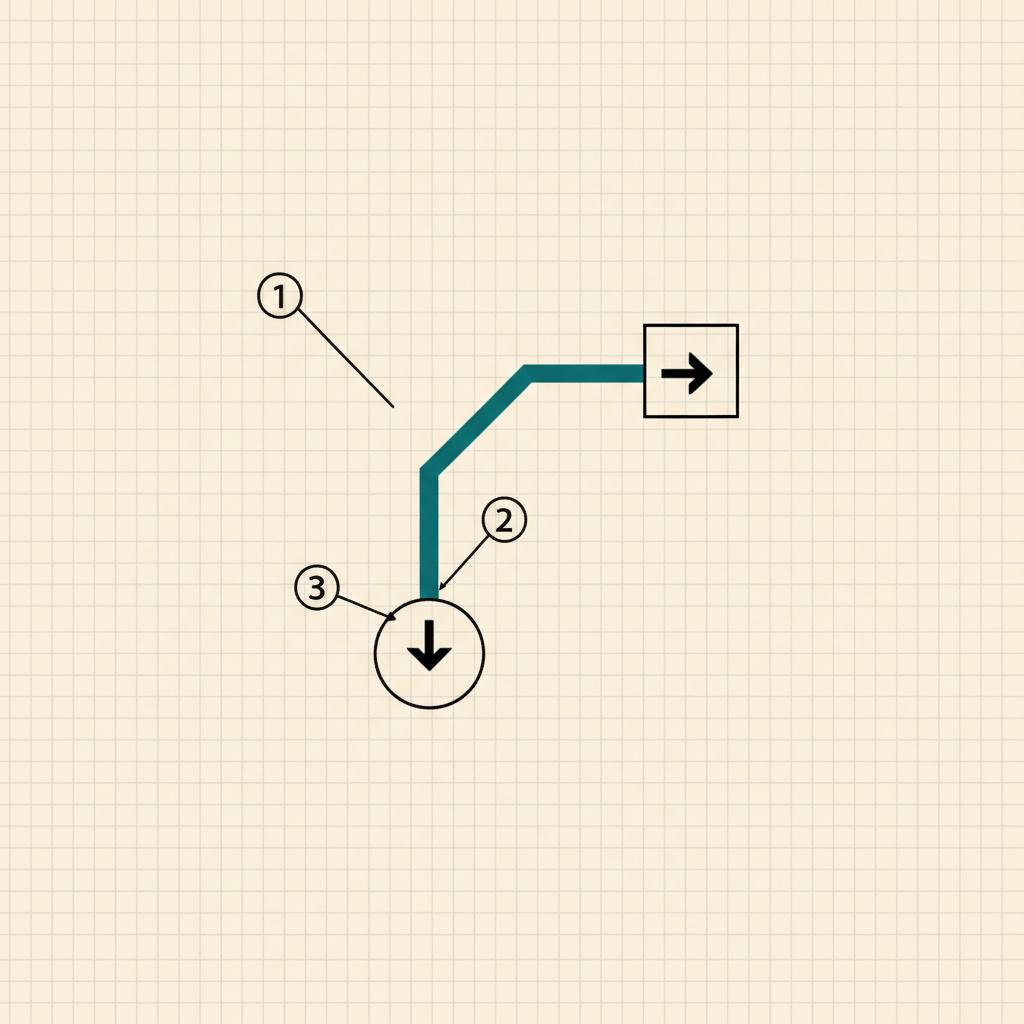
An HTTP trailer arrives after the streamed content. That timing supports a digest calculated over the completed body or a final generation status known only at end-of-stream. It also makes the field too late for routing or authentication. It is also too late for message framing and the decision to release earlier tokens. An LLM gateway needs a named allowlist and a separate trailer data structure. Treating trailers as late headers creates a policy path that runs after the bytes have already moved.
TL;DR
- Accept trailers only when the HTTP version and framing mechanism support them and the field definition permits trailer use.
- Keep trailer fields separate from initial headers; merge only when the field specification defines a safe merge.
- Deny framing, routing, authentication, and content-format names in trailers. Deny policy-control names as well.
- Preserve approved digests, signatures, metrics, or final status only across tested protocol paths.
Trailers are end-of-message metadata
RFC 9110 Section 6.5 defines trailer fields as fields located in a trailer section. It gives message integrity checks, digital signatures, delivery metrics, and post-processing status as useful cases. In HTTP/1.1, RFC 9112 Section 7.1.2 places that section after the zero-sized chunk in chunked transfer coding.
A streamed LLM response can therefore send content first and final metadata later. The metadata might report a digest over the conveyed bytes or a signature produced after generation. A provider-specific completion status can arrive there too. Server-sent events remain inside the message content. They are separate from HTTP trailers, even when both appear during one streaming response.
This distinction belongs in the gateway parser. SSE data: lines feed incremental content inspection. Trailer fields enter a separate end-of-message handler. The AI gateway streaming responses guide covers the content path and backpressure behavior.
Timing defines the denylist
RFC 9110 states that fields needed before content arrives cannot be generated as trailers. That category includes message framing and routing. It also includes authentication, request modifiers, response controls, and content format. A gateway has already made choices based on the initial header section. A later field cannot safely reverse them.
For an LLM response, deny at least these classes:
- Framing fields such as
Content-LengthandTransfer-Encoding. DenyTraileras well. - Routing fields such as
Hostand forwarded host metadata. This also covers location controls used by the adapter. - Authentication fields such as
AuthorizationandProxy-Authorization. Authentication challenges are also denied. - Content interpretation fields such as
Content-TypeandContent-Encoding - Connection controls such as
Connection,Upgrade,TE, andKeep-Alive - Gateway policy fields for identity, tenant, classification, route, or decision outcome
A trailer named X-Policy-Decision: permit is a red flag in twelve visible bytes. The policy decision had to exist before the first model token left the gateway. Reject that field and retain the parser reason.
The allowlist should start empty
Field names gain trailer eligibility from their definitions, not from a gateway administrator's guess. RFC 9110 requires the sender to know that the corresponding field definition permits trailer use. Start with an empty allowlist. Add one field only after documenting its specification, producer, consumer, merge rules, protocol support, size bound, and failure behavior.
A candidate digest field needs a verifier that calculates over the same message content and coding stage as the sender. A candidate signature needs a defined signature base, credential resolution, algorithm policy, and failure action. A delivery metric needs a numeric grammar and a clear statement that it supplies telemetry rather than authorization.
Provider-specific fields need the same discipline. Record the provider and API version that emit them. Scope each name to the relevant route instead of enabling it globally. Unknown fields should be discarded or rejected according to route policy. Security-sensitive unknowns deserve rejection.
The LLM request signing guide explains why a signature protects only the components included in its defined profile.
Trailer declarations are hints rather than proof
The initial Trailer field lists names the sender anticipates sending. RFC 9110 says the declaration lets a recipient prepare for metadata such as a dynamic checksum. It also says there is no guarantee that the sender will follow through. A declaration is a hint.
Validate declared names against the allowlist before releasing the request to a provider or accepting a streamed response. A forbidden declaration can fail early. An allowed declaration reserves parser state and verification work within configured limits. At end-of-message, validate each received field again because undeclared trailers can still appear.
For HTTP/1.1 responses, a request containing TE: trailers indicates willingness to accept a trailer section through the downstream chain. It does not promise that the client understands each field. It also does not prevent an intermediary from discarding trailers on a different path. The gateway should generate its outbound capability declaration for the next hop rather than copying the caller's field.
Intermediaries often discard trailers
RFC 9110 warns that protocol translation makes trailers difficult to process and that many intermediaries discard them. A server should avoid trailers that the user agent must receive. This is especially relevant when a model provider speaks HTTP/2 to the gateway while the corporate client receives HTTP/1.1, or when a CDN buffers and reserializes the response.
Map the actual route. Record the inbound and outbound protocol versions at each proxy. Test buffering, compression, SSE forwarding, timeout behavior, and end-of-stream handling. A gateway that removes chunked coding may retain or discard trailers. If it retains them, RFC 9112 requires separate storage or a merge explicitly permitted by the field definition.
A required security decision should therefore run at the gateway that receives the trailer. Downstream receipt is an optional delivery property unless the entire chain proves preservation. If a digest failure means the response must be blocked, the gateway has to buffer content until verification completes. Streaming earlier bytes and failing the final digest later produces detection after disclosure.
Release timing changes integrity guarantees
A final digest or signature can verify a completed stream. It cannot retroactively retract tokens already delivered to the application. Choose an explicit release mode.
In buffered verification, the gateway stores the complete response and validates the trailer before releasing content after success. This gives strong final integrity at the cost of streaming latency and bounded storage.
In progressive release, the gateway forwards inspected chunks while calculating the digest. A final mismatch closes the stream and records failure. Earlier chunks have already reached the client, so this mode supplies detection and truncation rather than pre-release verification.
In detached evidence mode, the gateway forwards the stream and stores the final digest or signature beside the audit record. The metadata supports later evidence checks. It never controls content release.
Name the selected mode in route configuration and audit output. The AI gateway fail-closed guide covers how unavailable verification dependencies affect release decisions.
Parsing and resource limits belong before field semantics
Trailer sections are attacker-controlled input. Set limits on total bytes, field count, name length, value length, duplicate count, and completion time. Reject control octets, invalid field syntax, forbidden line folding, and connection-nominated names. Apply the same normalization library used for initial fields while retaining the separate data structure.
Duplicates need field-specific handling. RFC 9110 permits list-based processing for fields defined that way. A gateway should never concatenate arbitrary duplicate security fields. If the specification lacks a merge rule, reject duplicates. Preserve original order for an approved list-based field because field order can carry semantics.
The gateway should also handle incomplete streams. A connection that closes before the zero chunk and final empty line yields an incomplete HTTP/1.1 message. Mark expected trailers absent, fail any required verification, and prevent the connection from returning to a reusable pool.
Acceptance tests need the complete stream
Test through the provider adapter, policy proxy, load balancer, and client-facing protocol. Include these cases:
- An allowed digest is declared and received with a valid value; verification records the exact coding stage.
- The declared digest never arrives; required mode blocks release or terminates according to configured release mode.
Content-Lengthappears as a trailer; the gateway rejects it and closes the affected HTTP/1.1 connection.- An unknown provider field arrives undeclared; route policy discards it and records the action.
- Duplicate signature fields arrive; the gateway rejects them under the signature profile.
- An HTTP/2 upstream response crosses an HTTP/1.1 downstream hop; the approved trailer either survives as a separate field set or the test fails the preservation claim.
- The stream ends before the trailer section completes; the record marks the message incomplete.
Retain the declared names, received names, allowlist version, release mode, verification result, bytes released before final verification, and connection action. The AI gateway observability guide provides the neighboring separation between engineering traces and per-decision evidence.
DeepInspect
DeepInspect applies trailer controls only to authenticated user or agent traffic deliberately routed over HTTP through the proxy to an LLM endpoint. For that traffic, the proxy can keep approved trailer metadata beside the streamed response state and bind the result to identity, route, policy version, and final outcome. Direct provider calls and streams that bypass the proxy remain outside control.
Trailer verification cannot serve as pre-release enforcement after content has reached the caller. A DeepInspect deployment should select one of the release modes defined above per route and record that mode. Initial authentication and authorization stay in the header and content path before the LLM call proceeds. Prompt policy stays there too.
Book a demo today.