Expect: 100-continue as an Authentication Gate for LLM Requests

Expect: 100-continue lets an HTTP client present an LLM request line and headers before transmitting a large body. This guide explains how an authenticated gateway can reject invalid credentials, methods, routes, media types, or declared sizes at that header stage; when to send 100, 401, 405, 413, 415, or 417; and how to test clients and proxies without treating the mechanism as a complete authorization control.
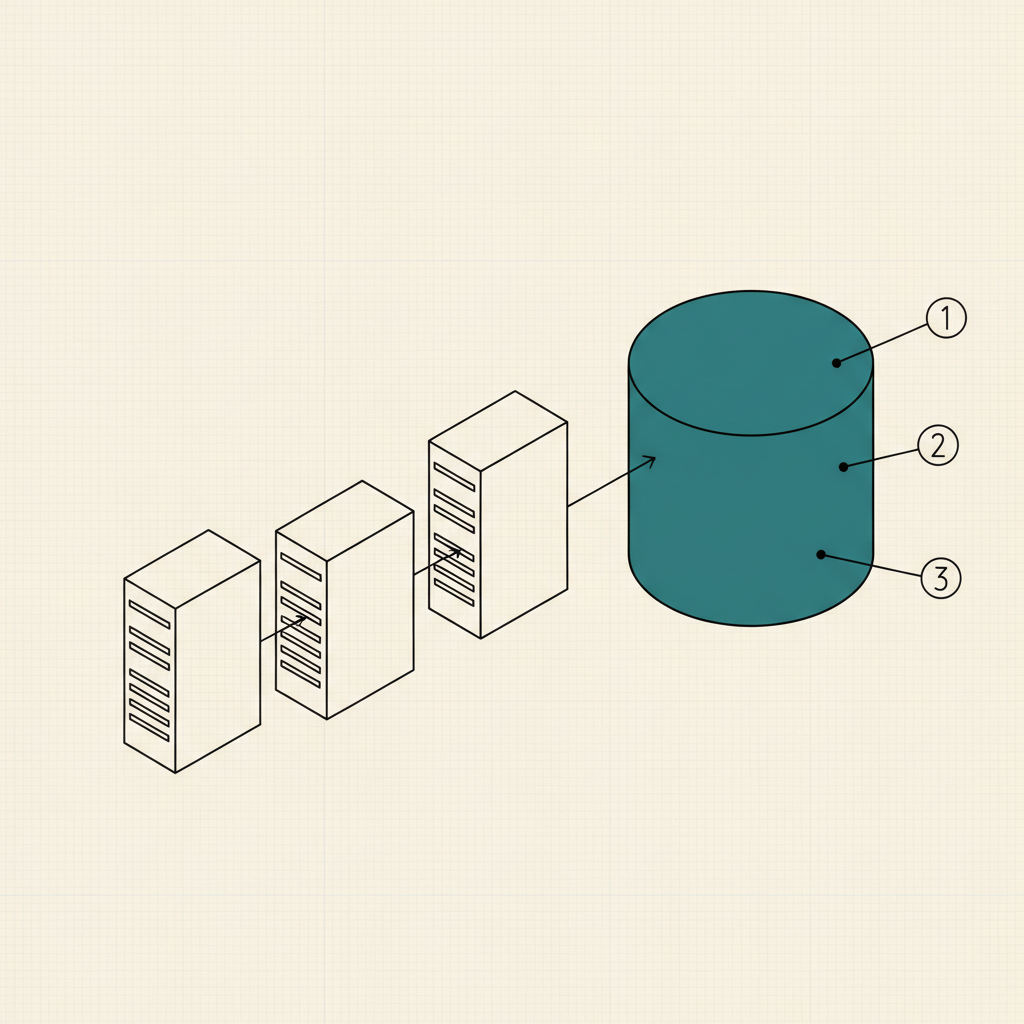
Expect: 100-continue lets an HTTP client send the request line and headers, then pause before transmitting a large body. RFC 9110 Section 10.1.1 defines the mechanism so a server can issue an immediate final response when the method and target URI already prove the request should fail. The headers can prove that too. For an authenticated LLM upload or long-context call, that creates an early gate for credentials and route policy. The early response saves a pointless transfer, while authorization still runs on the body that arrives later.
TL;DR
- Evaluate credentials, method, route, declared media type, and declared size before sending 100 Continue.
- Send a final 4xx response immediately when headers establish rejection; send 100 only when the server is prepared to receive the body.
- Re-run body-dependent policy after receipt because 100 is an interim transfer decision, not approval of the LLM request.
- Test clients that wait, clients that send immediately, proxies, unsupported expectations, and early-final connection handling.
The handshake delays the request body
The only expectation RFC 9110 defines is 100-continue. A client uses it when request content will follow and the client wants to know if sending that content is worthwhile. The standard's example shows a large PUT where the origin can return 401 Unauthorized or 405 Method Not Allowed before the client starts filling the connection with an unnecessary transfer.
An LLM route gets the same benefit for large JSON prompts and multipart file ingestion. Batch payloads benefit too. The initial header block can carry an authorization credential and content type. It can also carry content length and route, along with method and tracing context. An authenticated gateway can decide several failures from those fields alone.
Picture a rack diagram with a thin envelope marked "headers" stopped at the first gateway, while a thick stack of paper marked "body" remains beside the client. The gateway either returns a final status or opens the gate with 100 Continue. The thick stack still needs inspection after it crosses that early transfer gate.
Header-stage checks should be deterministic
Perform every decision supported by the complete header section before sending 100. Validate the credential and bind the identity of the user or agent, including any workload identity. Match the route together with its method policy. Enforce the required media type and accepted coding. Then check declared length and tenant state. Apply any model authorization that depends only on headers and identity context.
A header-stage allow decision means "send the body for further evaluation." Use that exact meaning in code and logs. The final LLM decision may still depend on JSON schema and prompt classification. File inspection and token estimates may also affect it, along with tool configuration and response policy.
The post-authentication gap is relevant. Valid credentials establish who called. The gateway still needs to decide if this caller may use this route and model, then inspect the received content under per-request policy. Sending 100 after credential validation alone can be correct if body receipt is permitted, but the audit event must avoid calling that final authorization.
RFC 9110 fixes the immediate response choices
For an HTTP/1.1 or later request with 100-continue and content to follow, an origin must immediately send either a final status that can be determined from the method and target URI, with the headers also considered, or a 100 Continue response. It must not wait for the body before sending 100. RFC 9110 Section 15.2.1 says 100 indicates the initial request part has been received and has not yet been rejected.
Map known failures to specific final statuses. Invalid or missing credentials can receive 401. A known method disallowed on the route receives 405 with Allow. An unacceptable declared size can receive 413. An unsupported request media type can receive 415. A policy denial based on authenticated role can receive the API's authorization status. An unsupported expectation can receive 417 under Section 15.5.18.
I would never send 100 merely to keep client libraries happy. The interim response tells the client to spend bandwidth and server capacity. Header-known denials belong before it.
Clients may send the body without waiting
RFC 9110 allows a client that sends Expect: 100-continue to proceed without waiting for a specific period. A server may also omit 100 if some or all content has already arrived. The optimization therefore cannot be the only resource-control boundary.
Enforce connection, body-size, upload-rate, and timeout limits even when the body races the interim response. A client might send headers and content in one network burst. The gateway must be able to reject the request and stop forwarding while handling remaining bytes according to the HTTP connection policy.
The standard requires a server that sends 100 to eventually send a final status after receiving and processing the content, unless the connection closes prematurely. Clients discard the interim response and wait for the final result. In observability, these are stages of one request, not two independent requests.
Attach a shared correlation ID to headers_received, continue_sent, body_received, and final_decision events. That sequence makes a stalled upload visible without inventing a model invocation.
Proxies need explicit early-final behavior
A proxy receiving an eligible request must either send an immediate final response when headers determine it or forward the request line and headers toward the origin. Intermediaries can complicate the exchange by generating or consuming 1xx responses. They may also buffer bodies or use HTTP/1.0 on one hop.
Test the deployed chain rather than only the application server. The load balancer may answer 100 automatically before the identity-aware gateway sees the headers. A reverse proxy may buffer the full body, erasing the bandwidth benefit. Another intermediary may forward the final 401 but leave the connection state ambiguous.
RFC 9110 says a server that sends a final response before reading the entire content should indicate if it will close the connection or continue reading. Make that connection choice explicit in configuration and tests. Request desynchronization risks increase when components disagree about unread bytes and message boundaries. The OWASP API Security mapping for LLM endpoints places this protocol configuration beside authentication and resource controls.
Body policy runs after 100 Continue
Once the body arrives, validate framing and media type. Then validate schema, size, and LLM-specific content under the authenticated request context. Confirm that actual bytes agree with declared fields. A declared JSON body may be malformed. A claimed multipart boundary may be absent. A prompt can violate role or data-classification policy even after its headers pass.
The model receives the request only after this second stage. For a file-bearing agent call, scan and classify the file before including extracted text in model context. For a long JSON prompt, parse once and apply the same representation decision across the gateway and model adapter. The LLM security testing guide provides the fixture approach for keeping header-stage and body-stage results separate.
Treat provider forwarding as another boundary. The gateway can complete the client-side 100 exchange and inspect the body. It can then create an upstream request under its own connection policy. It should avoid blindly copying hop-specific timing assumptions into the provider call.
A complete test set covers timing and status
Use a client capable of controlling the pause between headers and body. Test valid authentication followed by 100 and a final success. Then test expired credentials and a disallowed method. Test an excessive declared size and unsupported media type. Test an unknown expectation. Verify that each receives the intended final status before body transmission.
Add clients that ignore the pause and send immediately. Test partial content after 100 and a timeout while receiving it. Add a connection close after the interim response, followed by a fixture whose bytes exceed the declared length. Run the same fixtures through every production intermediary and HTTP version transition.
The evidence should show bytes sent by stage. A terminal capture with headers ending at a blank line, followed by a visible pause and HTTP/1.1 100 Continue, proves the client waited. For an early 401 fixture, the capture should contain no prompt bytes and the provider telemetry should contain no matching request.
Record identity and route, along with the method and expectation value. Record declared size and the header-stage decision. Include the interim status and received byte count. Add the final decision and policy versions, then attach the correlation ID. Keep prompt content out of transport logs.
DeepInspect
DeepInspect operates on authenticated HTTP traffic routed between users or agents and LLM endpoints. At the header stage, it can evaluate supplied identity context with method and route. It can also evaluate the model destination and declared type, along with declared size. A request that fails those checks can receive a final response before its large body is forwarded.
After body receipt, DeepInspect can apply schema, prompt, data, and model policy before the request reaches the LLM. Separate decision records can preserve the early transfer gate and the final content decision under one correlation ID. Client behavior and intermediary configuration are responsibilities of the surrounding HTTP architecture. Direct bypass paths are too.
Book a demo today.