Vector Database Security Controls for Retrieval and Tenant Isolation

Vector database security controls start with identity-bound retrieval, tenant or namespace isolation, and provenance that survives chunking and re-indexing. They continue with negative tests, query evidence, deletion mapping, and inspection of the assembled prompt at the HTTP model boundary. Storage and request-path owners have separate enforcement jobs.
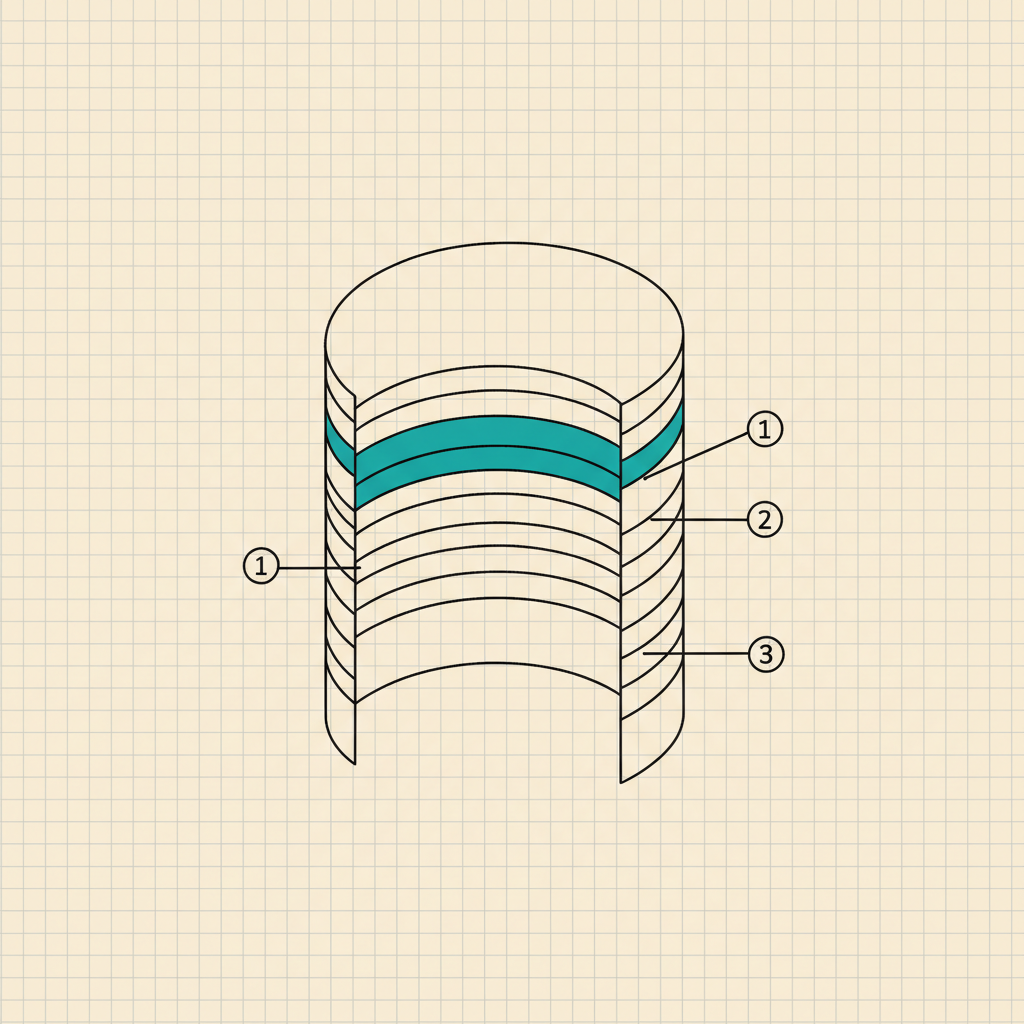
Vector database security controls fail when similarity search receives more authority than the caller. A query vector has no tenant or employment status. It has no clearance or legal basis. Those facts must arrive through the application and constrain the search before ranking begins. On a screen, the defect looks harmless: six plausible passages under a question. One grey result card may contain another customer's contract because the retrieval query searched the wrong namespace.
The control model has two owners. The retrieval tier enforces identity and tenant scope, along with provenance and lifecycle rules around the index. The AI request boundary governs the assembled prompt after retrieval, when selected passages are about to travel over HTTP to an LLM. Treating those checkpoints as one control leaves either storage or egress unowned.
TL;DR
- Bind every retrieval query to authenticated identity and current entitlements before similarity ranking.
- Isolate tenants with a namespace or collection boundary selected for the data's sensitivity. Use an instance boundary when needed.
- Preserve source and owner details plus permissions and classification on every chunk, along with its version and ingestion time.
- Record the namespace and retrieval filters with the chunk IDs and index version. Include the decision without copying sensitive text into the audit store.
- Inspect the assembled prompt at the HTTP model boundary, while keeping vector-store enforcement with the retrieval owner.
Vector database security controls begin before ranking
Retrieval authorization should construct the candidate set the caller may search. The application resolves the identity and entitlements, then supplies an allowed tenant or resource scope to a server-side query builder. The vector store applies that scope before nearest-neighbour ranking. Post-filtering can discard forbidden results after ranking, but it may also return too few permitted passages and expose result-count differences.
OWASP's Vector and Embedding Weaknesses guidance calls for permission-aware vector stores, validated sources, access controls, and detailed retrieval logs. Use that as a risk baseline. The concrete implementation still depends on the selected database and the organization's identity source.
The broader RAG security architecture maps retrieval as a data-plane boundary. This article stays with the controls that operate there and at the next HTTP request boundary.
Retrieval authorization needs current entitlements
Store stable permission references because copied access lists become stale when a document owner changes, an employee leaves, or a customer revokes a shared folder while old chunks remain in the index. At query time, resolve current rights or use a time-bounded cache with invalidation.
The authorization decision should include the subject, tenant, permitted corpus, classification ceiling, purpose or application route, and query time. Keep query construction on the server. A client-supplied filter such as tenant_id=acme is merely input until the server proves that the caller belongs to Acme.
Test two identities against the same semantic query. One receives the approved document. The other receives zero chunks from it, including after a permission change. This is a negative authorization test, not a relevance evaluation.
Namespace and tenant isolation need a named boundary
Choose isolation according to blast radius. A shared collection with metadata filters keeps operations compact but makes each query builder part of the tenant boundary. Separate namespaces or collections remove some classes of forgotten-filter error. Separate instances may suit regulated workloads that require stronger operational separation.
Pinecone's multitenancy documentation describes one namespace per tenant for its serverless indexes. It states that data operations target one namespace and that namespaces are stored separately in that architecture. That is product-specific evidence for one implementation pattern, not a universal property of every vector database.
Derive the namespace on the server from authenticated tenant context. Deny requests whose resource identifier conflicts with that context. Run a cross-tenant query in CI and in a scheduled production-safe synthetic test. A filter visible in source code is weaker evidence than a recorded denial against the deployed service.
Provenance must survive chunking and re-indexing
Every chunk needs its document ID, system of origin, tenant, owner or permission reference, classification, ingestion timestamp, document version, and transformation version. Add a content fingerprint so a reviewer can prove which revision produced the chunk without storing another full copy in the audit system.
NIST's Generative AI Profile recommends verifying provenance for training and evaluation data and checking that retrieval-augmented generation data is grounded. It also calls for inventories that document data provenance and model versions along with access modes. Apply that discipline to the corpus and index build.
Re-indexing should produce a new index or corpus version. Keep the prior version addressable during rollback and record which version answered each query. A chunk with no source link becomes an orphaned assertion once its original document changes.
Retrieval evidence should record the decision
For every query, retain the correlation ID, resolved subject and tenant, namespace or collection, filters, returned chunk IDs and index version, plus the timestamp and authorization outcome. Avoid copying raw chunk text into the audit repository unless the evidence policy requires it. Duplicating the corpus inside logs creates another sensitive store.
Join this retrieval record to the application request and the later model call. The evidence should show that user 1842 queried tenant Acme, policy version 27 limited the candidate set, chunks 8 and 19 entered the prompt, and index build 2026-10-08.3 supplied them. That line is far more useful than vector_search: success.
A vector database security checklist provides the pre-production acceptance questions. Runtime controls keep producing this evidence after release.
Deletion and permission changes need chunk mapping
Maintain a source-to-chunk manifest at ingestion. When a source document is deleted, the workflow can remove its chunks and replicas, plus cache entries, by identifier. The same map supports permission changes by identifying what must be invalidated or re-indexed.
Test deletion with a synthetic source. Search for its distinctive phrase before deletion, execute the workflow, then repeat the query against each serving replica and cache path. Record the index version that first excludes it. A green source-system deletion says nothing about the serving index unless the test reaches retrieval.
Permission revocation deserves a similar service objective. Measure the interval between the source-of-truth change and the first denied retrieval. That interval is the exposure window the control owner can defend.
The assembled prompt crosses a second boundary
Authorized retrieval determines which chunks the caller may search. The assembled-prompt decision determines whether this classified content may go to the selected model destination under the application's policy. A caller can legitimately read a document while policy still forbids sending it to a third-party model or a model hosted in another jurisdiction.
The application should carry chunk IDs and source classes into the outbound request metadata. It should carry provenance labels too. On the decrypted HTTP path, a request-layer control can inspect the prompt, apply destination and data-class policy, and block or redact before transmission. The LlamaIndex security patterns article shows the same ownership split inside a retrieval framework.
This second boundary catches egress risk after retrieval. Cross-tenant queries and orphaned vectors remain retrieval-tier controls. Namespace selection does too.
DeepInspect
DeepInspect operates at the second boundary described above. When an application intentionally routes an authenticated user's or agent's HTTP model request through DeepInspect, it can evaluate the supplied identity context and assembled prompt. It can also evaluate provenance metadata and model destination. It can block or redact the request and commit a per-decision record before content reaches the LLM.
DeepInspect does not front the vector database or choose namespaces. It does not enforce storage ACLs or delete embeddings. Those controls stay with the retrieval service and database. Join the retrieval record to DeepInspect's model-request record with a correlation ID, so an investigator can trace which authorized chunks were considered and what policy governed their outbound use. Book a technical deep dive at deepinspect.ai.
Frequently asked questions
- Is metadata filtering enough for retrieval authorization?
Metadata filtering can enforce retrieval scope when the server derives filters from trusted identity and the database applies them before ranking. Its adequacy depends on data sensitivity and the number of query paths that must apply the filter correctly. Separate namespaces or collections reduce the impact of one missing predicate. Test the deployed boundary with cross-role and cross-tenant negative cases.
- Should each tenant have a separate vector database?
A separate instance gives a strong operational boundary and adds cost and administration. Many systems use one namespace or collection per tenant, provided every read and write targets a server-derived tenant scope. High-sensitivity or contractually segregated workloads may justify separate instances. Document the decision and blast radius. Include the negative-test evidence.
- What provenance belongs on an embedded chunk?
Keep the document ID, system of origin, tenant, permission reference, classification, document version, ingestion time, transformation version, and a content fingerprint. Add the chunk ID and index version during indexing. This lets a reviewer trace retrieved text to the exact revision and identify every chunk affected by deletion or a permission change.
- Can a gateway secure the vector database directly?
A gateway on the HTTP path to an LLM sits after retrieval. It can inspect the assembled prompt, enforce model-destination and content policy, and record that model request. The vector database owner still enforces query authorization and tenant isolation, along with index access and deletion. It also enforces backups and storage encryption inside the retrieval tier.