Tokenization vs Redaction for LLM Prompts: Reversibility Changes the Risk

Redaction removes or masks sensitive values before an LLM call. Tokenization replaces them with references that an authorized service may later resolve. The reversible path preserves workflow utility and creates a token vault, access-control, and re-identification obligation. Choose per data field and output requirement.
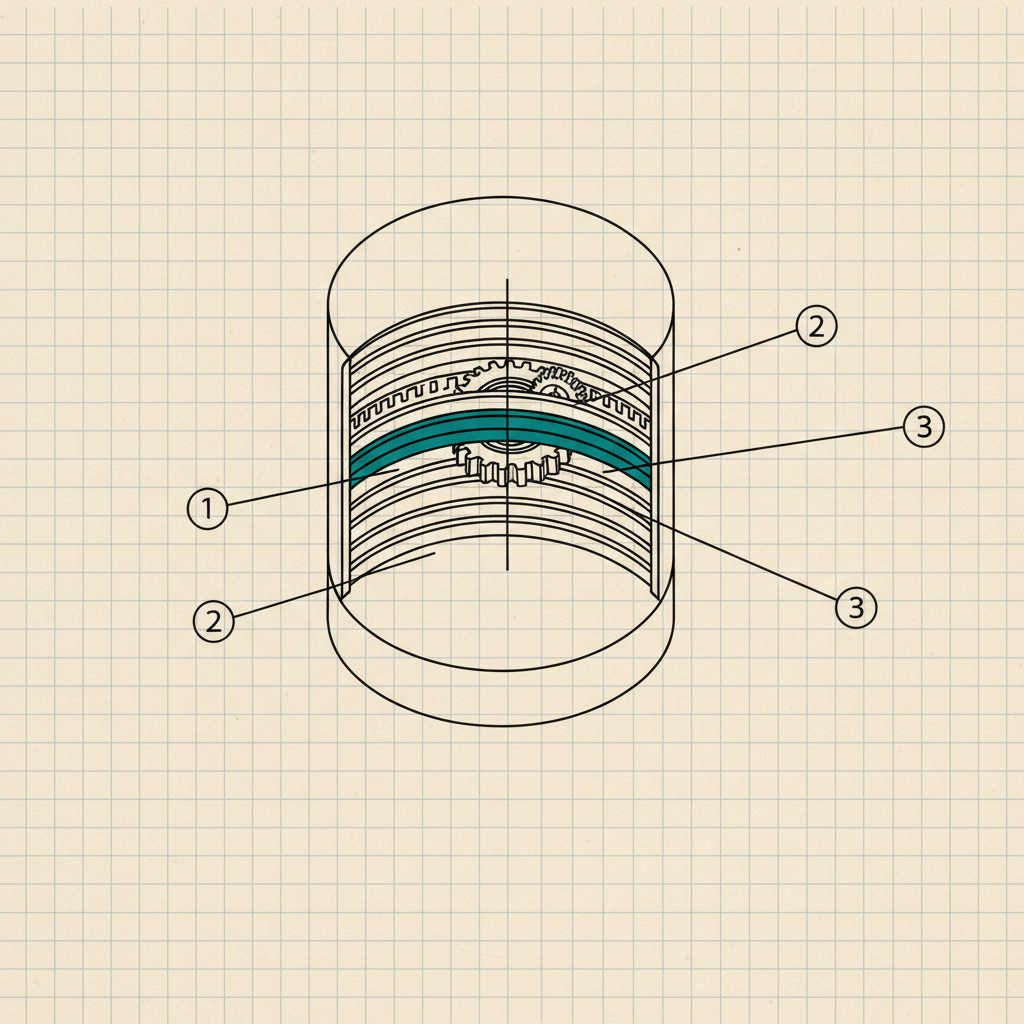
Redaction removes a value from the model's view. Tokenization replaces the value with a reference. Another authorized component may reverse it. That single difference creates two very different failure modes: lost context after redaction, or re-identification exposure around the token vault.
TL;DR
- Use redaction when the workflow can finish without recovering the original value.
- Use tokenization when an approved downstream step must restore the value.
- Keep detokenization outside the model path and bind it to identity, purpose, policy, and request context.
- Decide separately for each field because one prompt may require both methods.
Redaction minimizes exposed content
Microsoft Presidio documents PII detection and anonymization patterns for locating sensitive entities and transforming text. Redaction can remove a name, account number, health identifier, or email address before the prompt reaches a model. Masking preserves a limited shape when the task needs it, such as the last four digits.
The model cannot reason over a value it never receives. That is a strength for summarization and classification tasks. It becomes a limitation when exact identity or matching is required. A black rectangle over an account number on a PDF is the visual version of the same trade.
Redaction also changes the text the model receives. Remove every customer name, and a conversation may retain several speakers but lose any reliable way to distinguish them. A consistent placeholder can preserve that distinction without exposing the original value. The policy therefore needs to specify whether an entity disappears, becomes a fixed label, or keeps a limited visible pattern.
The application must also decide what happens when detection is uncertain. A low-confidence match creates two risks. Sending the original value creates exposure, while removing an ordinary word after a false match can damage the task. That threshold belongs in the policy for the specific route rather than in one global setting for every prompt.
Tokenization preserves a recovery path
Tokenization substitutes a reference such as CUSTOMER_4827. It stores the original mapping elsewhere. The model can work with the stable reference, while an authorized service restores the value after the response. Google Cloud's Sensitive Data Protection transformation guidance describes reversible and irreversible de-identification choices, including cryptographic replacement approaches.
The vault becomes a high-value system. Define who can create, resolve, rotate, and delete mappings, and record every detokenization event. My opinion is that tokenization without purpose-bound detokenization merely moves the sensitive-data problem behind a new API.
Token scope matters as much as token format. A reference issued for one request should not automatically remain valid for another user or a later workflow. Bind the mapping to the smallest useful context. Then expire it when recovery is no longer required. This limits what an exposed token can reach without removing the approved recovery path.
The reference should also remain distinguishable from ordinary text. A model may generate a string that looks valid. Even then, the application has to verify that the token was issued by the vault and belongs to the current operation. Pattern matching alone cannot establish that authorization.
Pick per field and workflow
A support summarizer can usually redact payment card numbers and passwords. A claims workflow may need a reversible patient or case reference so the approved application can attach the final summary to the correct record. Free-text notes can contain both classes at once.
Build policy by entity type, caller role, route, and task. Test nested JSON, attachments, tool arguments, and streamed responses. The LLM DLP guide covers classification at the prompt boundary, while the AI gateway guide covers where the transformation can run before forwarding.
Start with the output requirement for each field. If the final application never needs the original value, redaction removes an unnecessary recovery path. An approved process may instead need to reconnect the model output to a record, in which case tokenization preserves that function. The same prompt can redact credentials while tokenizing a case reference.
Policy tests should use the actual request structure accepted by the route. A rule that handles plain text may miss the same value inside an attachment or a tool argument. Streamed output needs the same control. A token may appear before the complete response is available for validation.
Output handling closes the loop
A model may echo a token, copy one from context, invent a token-like string, or produce content that combines several references. Validate outputs before detokenization. Allow only tokens issued for the same request or workflow, and cap the fields that may be restored.
Audit records should store the transformation policy, detected entity class, action, token reference where approved, caller identity, and decision. Avoid copying the original value into a general log.
Restore values as late as the workflow permits. The service performing detokenization should receive the validated output plus the authenticated caller context, then reject unknown tokens or references issued outside the permitted scope. A response containing two valid tokens still needs field-level checks before either value is restored.
Failure handling should preserve the safer state. The vault may be unavailable. In that case, the application can return the tokenized result or stop the workflow according to policy. It should not bypass the vault by sending the original value through a different model request.
DeepInspect
DeepInspect can classify authenticated HTTP prompts and apply an allow-or-deny decision or a transformation policy before the request reaches an LLM. Reversible token vaults and detokenization services remain separate systems with their own access controls.
That boundary lets the gateway record which policy acted on the request without placing the original value in a general audit log. The application remains responsible for presenting an authenticated request and for controlling any later detokenization step.
Book a technical deep dive at deepinspect.ai.
Frequently asked questions
- Is masking the same as redaction?
Masking reveals a limited portion or pattern. Full redaction removes the value. The policy should name the exact transformation rather than grouping both under "protected."
A masked value can still expose useful information to the model, such as the final digits needed to distinguish two accounts. That retained portion remains part of the prompt. It should be treated as disclosed content. Full redaction removes that comparison ability along with the value.
- Can the LLM detokenize values itself?
Giving the model vault access collapses the separation. Detokenization belongs in an authorized application service after output validation.
The service should check two things: that the caller is permitted to recover that field, and that the token belongs to the current workflow. The model can pass the reference through its response without receiving the original mapping.