Platform Engineer AI Risk Checklist for Material Changes

This platform engineer AI risk checklist turns a material AI service change into a signed go/no-go decision. Seven checks bind the decision to the exact route and identity contract, approved provider or model, policy version, tested failure behavior, rollback proof, latency result and emitted evidence. It is a change gate, separate from recurring platform reporting.
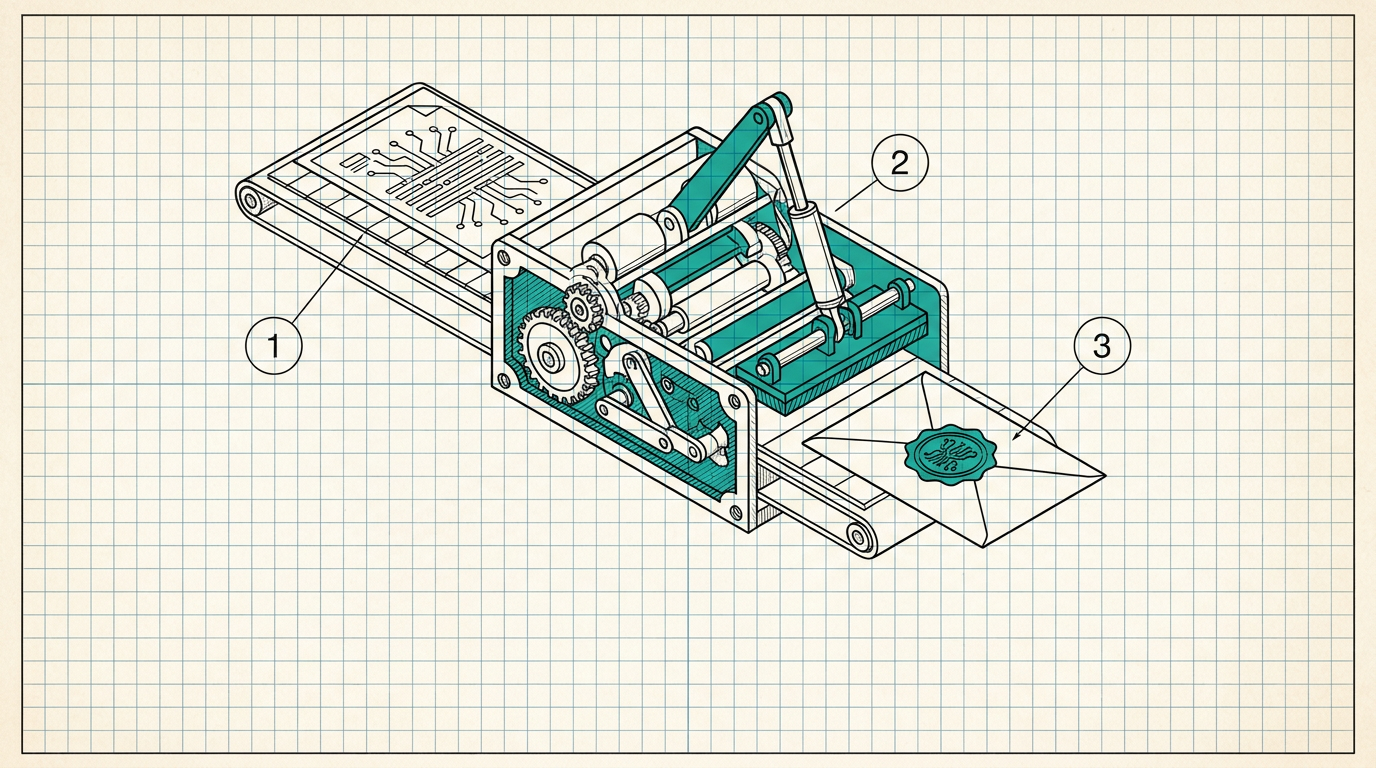
A model alias changes at 14:00. By 14:05, requests may reach a different endpoint, so a platform engineer AI risk checklist puts that change behind a material-change gate. The output is a signed go/no-go record tied to the route and review evidence. Recurring health reports remain separate.
TL;DR
- Reopen the gate when a route, identity contract, provider or model changes materially.
- Test the exact policy version and failure behavior on a production-like path before deployment.
- Prove rollback and measure added latency with the candidate configuration under production-like conditions.
- Sign one go/no-go record that links every decision to emitted request evidence.
Check 1: set the platform engineer AI risk checklist boundary
Name the route ID and current release in the deployment ticket, then describe the proposed state. A change qualifies when it can alter caller authority or destination, and new policy treatment, fallback behavior or changed evidence emission also reopens the gate.
Freeze the candidate during review. The route manifest identifies the calling service, production environment, destination and change owner. Export the reviewed configuration and store its digest with the ticket. A mutable console screenshot is weak evidence.
Pass condition: the reviewer can compare a fixed before state with the candidate, and the ticket names the change owner and approval authority.
Check 2: exercise the identity contract
Send requests carrying the identity fields required by policy, first with a permitted principal and then with one that has insufficient authority. Finish with a request missing one required field. The identity-aware AI gateway guide explains the post-authentication authorization gap.
NIST SP 800-207 assigns access decisions to a policy engine and says that engine logs approval or denial, while its policy enforcement point enables and monitors the connection. For this gate, the platform team must prove that the application-supplied identity reaches that decision point unchanged.
Pass condition: every test resolves to the expected principal and decision. Missing identity reaches a documented stop state instead of a shared default identity.
Check 3: pin the provider and model destination
Record the provider account, endpoint and resolved model identifier in the candidate manifest. Keep region and fallback order beside any friendly alias because a provider swap can change data handling even when the API shape stays constant.
Run one request through every production destination and capture the resolved model where available. An unreachable fallback earns a failed test.
Pass condition: observed destinations match the approved manifest. Unknown endpoints remain unreachable, and each fallback has a dated test result linked to the change.
Check 4: bind the policy version to the route
A route approval points to the exact policy artifact tested, including its version or digest and effective time. Then test one permit case and one deny case against the assembled request after application context has been added.
NIST SP 800-207 separates the policy decision point from the enforcement point, making policy deployment part of the change. I would block a release when the ticket says "latest policy." The phrase identifies no reviewable artifact. It gives an incident responder nothing to reconstruct.
Pass condition: test records show the candidate route using the approved policy digest. A stale or missing policy produces the documented closed behavior.
Check 5: force the documented failure behavior
Interrupt the primary provider during a production-like test, repeat with unavailable policy evaluation, then remove required identity context. Record the observed state and any retry or fallback.
The cursor should stop on one clear result in the review: blocked, approved reroute or named error. Silent pass-through leaves the candidate's behavior unknown.
Pass condition: each injected fault matches the route specification and emits an operator-visible signal. Policy bypass or an unapproved destination produces no-go.
Check 6: prove rollback and measure latency
Restore the last approved route configuration in a production-like environment, including the identity contract and policy version along with routing. Use the AI gateway rollback strategy to keep the recovery target tied to a tested manifest.
Measure latency with the candidate policy path enabled, state the observation window and request population, and compare the distribution with the route's service objective. Retain correlation values for slow requests.
The NIST Secure Software Development Framework calls for documented test results in PW.8.2. PS.3.1 retains release files and supporting integrity or provenance data. Together, they support a rollback package bound to the candidate.
Pass condition: rollback reaches the approved target and passes a route smoke test. Candidate latency stays within the route's stated budget, with raw results attached.
Check 7: verify evidence emission and sign the decision
Inspect emitted records for an allowed case, a denied case and one failure. Each record needs event time and source, plus the outcome, while preserving caller identity and route ID. Add destination, policy version and a correlation value for provider telemetry.
NIST SP 800-53 Revision 5 requires audit content that establishes what happened and when. AU-3 also covers source, outcome and associated identity. CM-3 requires review plus approval or disapproval of controlled changes, while CM-4 calls for impact analysis before implementation.
The signed record names the candidate, links every test artifact and states go, conditional go or no-go. The signed AI request log guide covers request-record design. The change record preserves the platform decision above those events.
Pass condition: the platform owner and change approver sign a dated decision. Any later material change invalidates it and opens a new gate.
DeepInspect
DeepInspect sits on authenticated HTTP traffic between enterprise users or agents and LLM endpoints, evaluating application-supplied identity and the assembled request against a versioned policy. Each outcome can produce a signed per-decision record outside the application's write path.
Those records support route and policy tests for managed traffic. The platform team owns provider configuration, rollback execution, latency objectives and the final decision. Book a technical deep dive at deepinspect.ai.
Frequently asked questions
- Which changes should reopen the gate?
Reopen it for changes that alter destination, caller authority, policy treatment or failure behavior. Include provider-account changes and model substitutions, plus new fallbacks, modified identity fields and evidence schemas. Routine work stays in the normal delivery process when the approved AI request boundary remains intact.
- Does this replace platform risk reporting?
The gate answers whether one fixed candidate may enter production. AI risk reporting for platform engineers tracks live routes over an observation window. The signed record supplies its baseline, while live drift or repeated failure can trigger a fresh review.
- Who signs the go/no-go record?
Use the roles in the organization's change policy. A practical pattern has the platform owner attest to test evidence while a designated approver accepts the decision, with security or privacy reviewers signing scoped findings when their controls change. Each organization assigns the job title. NIST defines the control outcomes.