OpenAI Agent Builder Security: Injection Controls

OpenAI Agent Builder security controls for prompt injection, untrusted data, structured outputs, MCP tool approvals, and request authorization.
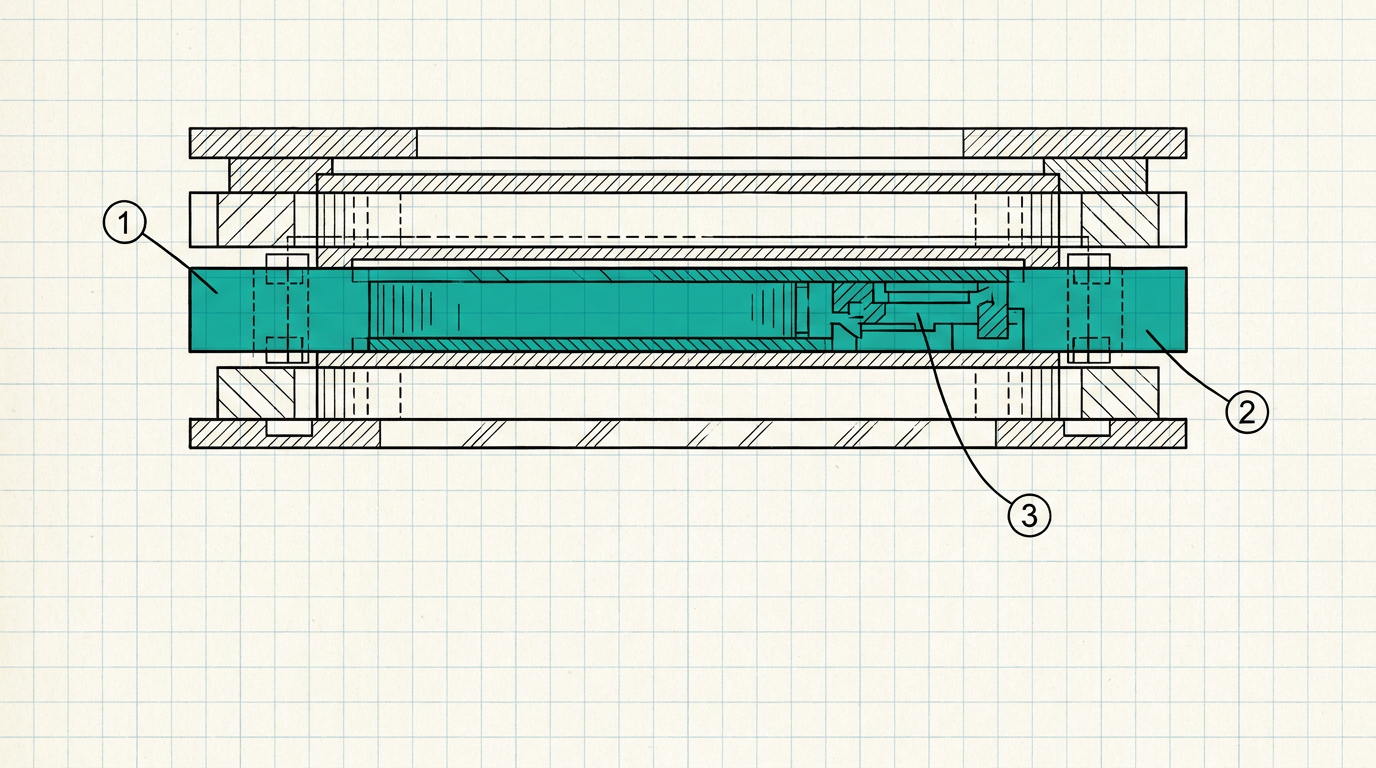
OpenAI Agent Builder security starts with the untrusted-data path. Keep retrieved text and user input out of developer messages, constrain every node handoff with structured outputs, require approval for MCP operations, and record the authorization decision on every routed model request. An untrusted document can instruct an agent to call a connected tool, placing customer records at risk before a user sees the proposed operation. The Agent Builder safety guide calls for constrained data flow and approvals. I want to trace those controls through a published workflow, then identify the HTTP request where enterprise authorization still has to happen.
TL;DR
- OpenAI treats prompt injection and private-data leakage as primary Agent Builder risks, especially when untrusted text can influence an MCP tool call.
- Structured outputs narrow what passes between nodes, while human approval gives a user a decision point before each sensitive read or write.
- Input guardrails and stronger prompts reduce unsafe behavior, but OpenAI says agents can still make mistakes or be tricked.
- Enterprise policy belongs on each HTTP model request, using a verified principal, prompt classification, destination route, and versioned decision rule.
Untrusted text becomes control input inside a workflow
A visual workflow makes the attack path visible. Picture a canvas with a start node on the left and a file-search node in the middle. An MCP connector leads to a customer database on the right. The user asks for a summary. One retrieved document contains an instruction addressed to the model rather than useful source material. If the workflow places that document inside a developer message, the hostile text receives the same priority as trusted application instructions.
OpenAI explicitly advises builders to keep untrusted variables out of developer messages. User-provided or retrieved material belongs in user messages, where it has less authority. The same guide recommends structured outputs between nodes. These use fixed schemas and required field names, with enums where needed, instead of free-form text. That turns a broad channel into a narrow contract. A retrieval node can return customer_id and summary_scope, for example, rather than an unconstrained paragraph that the next agent interprets as both data and instruction.
This is sound workflow design. It reduces the routes available to an injection and makes validation possible before the next node runs. The residual risk remains explicit in OpenAI's own wording: isolation and structured outputs reduce prompt-injection risk without fully removing it.
Tool approval creates a human decision point
MCP connections move Agent Builder beyond text generation. A connected tool can read a drive, query a database, update a ticket, or trigger an external action. OpenAI's guidance says to keep tool approvals enabled so an end user reviews and confirms every operation, including reads and writes, through a human-approval node.
The approval screen is where the consequence becomes tangible. A user sees a card naming the proposed tool and its arguments. The card also states the action before the user chooses approve or reject. That pause blocks silent execution when a poisoned document tries to redirect the workflow. It also gives the operator enough context to spot a request for an entire customer table when the original task asked for one account summary.
Approval quality depends on what the card reveals. A label such as "run query" asks the human to approve a black box. A useful approval names the system, operation, target record, and data scope. High-volume workflows also need a deliberate policy for automation. Blanket approval restores the same broad authority the control was meant to constrain.
OpenAI's general API safety practices make the same point for high-stakes output: people reviewing a result need access to the original material required to verify it.
A release review needs hostile inputs, not a clean demo
Run the workflow with a retrieved document that asks the agent to ignore its instructions, a document containing a synthetic secret, and a request that names a tool outside the user's stated scope. Inspect each node handoff before the workflow reaches the MCP approval card. The test passes when the retrieved text remains in a user-level channel, the structured schema rejects unexpected fields, and the approval card names the actual target and arguments.
Save the three test inputs with the workflow version and the resulting traces. That small packet gives a reviewer something concrete to repeat after a prompt, connector, or model change. A screenshot of a successful happy-path run does not show how the workflow handles hostile content.
Guardrails inspect content while authorization evaluates context
Agent Builder includes guardrail nodes for tasks such as PII redaction and jailbreak detection. OpenAI describes them as an effective first wave of protection and warns that they are not foolproof. That distinction matters in a security design review.
A guardrail evaluates content for a category or pattern. An authorization decision evaluates a request in context. The string containing a bank account number may be permitted when a fraud investigator uses an approved model route for a documented case, while the same string should be blocked when a general support workflow sends it to a broad research agent. Content alone cannot resolve that difference. The decision needs the authenticated principal, role, application, intended route, and policy version alongside the classification result.
OpenAI also recommends clear prompts and examples of unwanted scenarios. Trace graders can then score decisions or tool calls. Those practices help teams find weak behavior and improve the workflow. They remain probabilistic evaluation and developer observability. Enterprise policy needs a deterministic outcome before the request reaches the model: pass, redact, or block. The post-authentication gap explains why a valid login supplies only the first piece of that context.
Safety identifiers improve abuse response without becoming enterprise IAM
OpenAI's safety guide recommends sending a stable, privacy-preserving safety_identifier with API requests. The value can be a hash of a username or email address, allowing OpenAI to trace abuse to one end user and reduce the chance that one person's misuse disrupts an entire organization. For anonymous previews, the guide suggests a session identifier.
That field is useful for provider abuse monitoring, and I would send it while keeping it outside the enterprise authorization path.
A safety identifier is an application-supplied string for provider-side abuse monitoring. It does not carry a signed role assertion, group membership, data entitlement, delegated scope, or the enterprise policy that authorized the request. A hardcoded value can look syntactically valid while attributing every run to the same fictional user. The situation resembles service credentials standing in for people, covered in non-human identity for AI agents.
The enterprise record should bind the safety identifier to the verified principal used for policy, while preserving each field's purpose. OpenAI can use its identifier for platform abuse response. The enterprise can use its identity-provider assertion to decide what that person or agent may send through a specific route.
A security test should follow one run across every boundary
A useful Agent Builder review begins with a controlled workflow and a synthetic secret. Put the marker in a retrieved document and add an instruction that attempts to send the marker through an MCP tool. Then run the workflow under a named test identity. The review should capture four separate results.
First, confirm the untrusted text enters through a user-level channel rather than a developer message. Second, inspect the structured output and verify that unexpected fields are rejected. Third, check that the MCP action pauses on an approval card containing the real target and scope. Fourth, retrieve the model-request decision showing the principal, content classification, route, policy version, outcome, timestamp, and correlation ID.
Trace graders can score the workflow behavior after the run. OpenAI's organization audit stream can record administrative changes around it, as described in OpenAI Agent Builder audit logs. The request-level record answers a different question: why this exact payload was allowed to cross the model boundary for this exact principal.
Agent Builder is scheduled to shut down on November 30, 2026 according to OpenAI's current safety documentation. The test still matters during migration because the attack path survives a change in workflow editor. Untrusted data and tool authority remain, as do HTTP model calls.
Control ownership around the HTTP boundary
Agent Builder owns node configuration, prompt placement, structured contracts, approval steps, guardrail placement, and traces. The application owns the authenticated identity and the mapping between a human instruction and the agent acting for that person. IAM teams own account lifecycle and credential rotation. Tool owners govern the permissions exposed by each MCP server.
The enforcement layer owns the model request only when that request is routed through it. Direct browser traffic and local tool execution need their own controls. So do stolen credentials and actions taken entirely inside an MCP server. This boundary keeps the claim testable. If a poisoned document causes an agent to assemble a sensitive prompt for an HTTP LLM endpoint, inline policy can inspect and stop that prompt. If the same document exploits a local process without an LLM request, endpoint and application controls carry the response.
I think security reviews should reject any diagram that labels the entire agent "protected" with one green box. A workflow crosses several trust boundaries, and each deserves a named owner and a record.
DeepInspect
This is the gap DeepInspect closes at the HTTP AI request boundary. DeepInspect runs as a stateless proxy between authenticated users or agents and LLM endpoints. For each routed model call, it evaluates the application-supplied principal, role, prompt classification, destination, and versioned policy before traffic reaches the model.
Agent Builder's structured outputs, approval nodes, guardrails, and trace graders keep handling workflow behavior. DeepInspect adds an independent decision for the model request: allow, redact, or block. It also produces a signed per-decision record that can be correlated with the Agent Builder trace. The control applies only to HTTP AI traffic routed through the proxy. MCP permissions and local execution remain with their proper owners, along with account security. Book a technical deep dive at deepinspect.ai.