IBM watsonx.ai Security: What IAM Roles, Service IDs, and Private Endpoints Cover

IBM watsonx.ai secures access through three separate mechanisms: an IAM role hierarchy across platform, service, and workspace levels, Service ID credentials for programmatic access, and an optional private-network-only endpoint for the Runtime API. Each answers a different question about who can reach the platform. None evaluates the content of a specific prompt a permitted caller sends on a given request. This piece maps where each control ends.
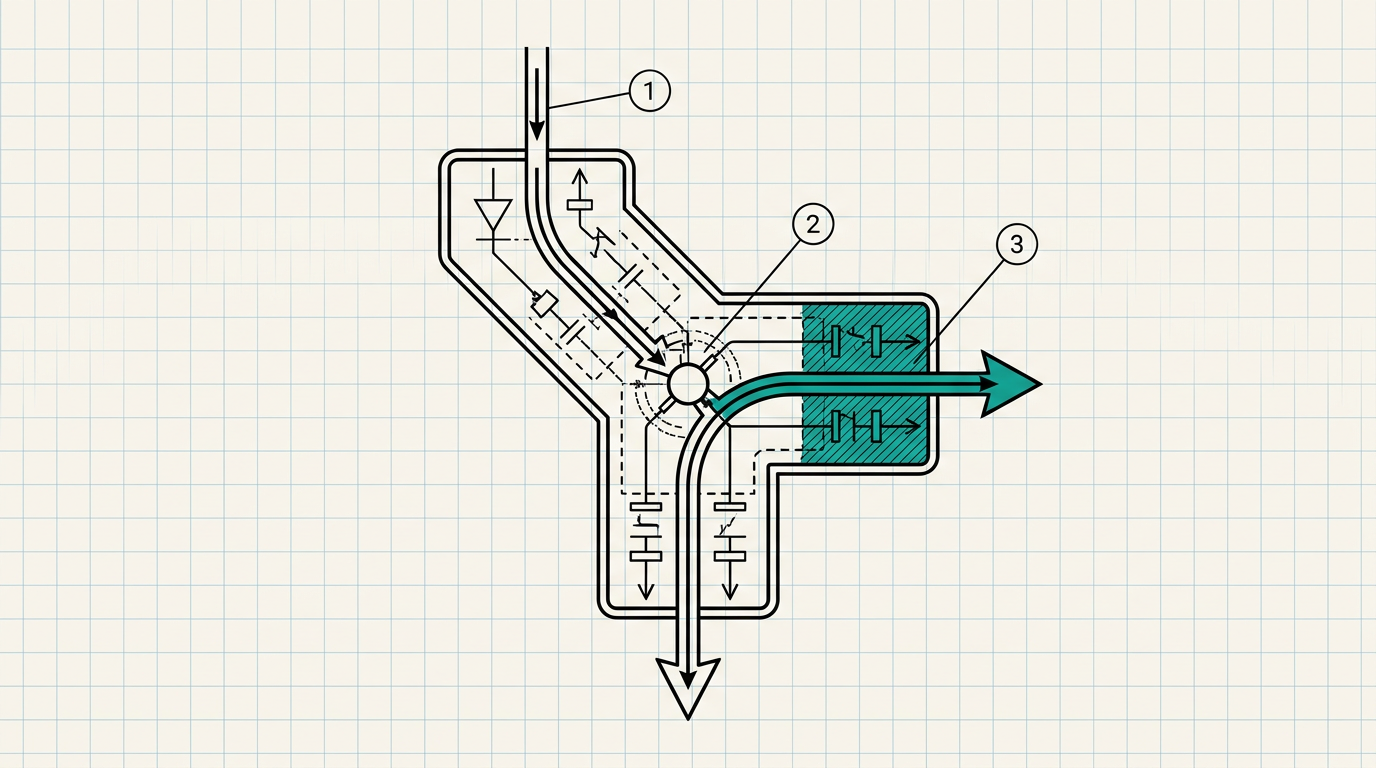
A call to watsonx.ai's foundation model API carries an IAM bearer token, a project or deployment-space ID, and a payload. Three mechanisms decide what happens before that payload reaches a model. IAM roles decide which identity may act on which project or deployment space. A Service ID and API key decide which credential a calling application presents. An optional private-network configuration decides whether the Runtime endpoint is reachable from the public internet at all. I want to walk through what each control secures, then the request none of them evaluate.
TL;DR
- IBM's IAM role hierarchy (Platform access roles, Service access roles, Workspace Collaborator roles, and IAM Access Groups) governs who can provision, configure, and use a watsonx.ai project or deployment space.
- Service IDs and API keys are the standard pattern for programmatic and agent access, authenticating the calling application rather than the person behind it.
- watsonx.ai Runtime instances default to a public endpoint; IBM Cloud's Virtual Private Endpoint mechanism can restrict access to VPC-scoped traffic only.
- None of the three inspects the content of a specific prompt against the sensitivity of the data it carries or the policy that should govern it at the moment of the call.
IAM roles authorize the account and the project, not the request
IBM's role hierarchy for watsonx.ai works at three levels. Platform access roles (Viewer, Operator, Editor, Administrator) control account-wide access to the service. Service access roles scope what a given identity can do within watsonx.ai specifically. Workspace Collaborator roles determine what a member can do inside a particular project or deployment space, and IAM Access Groups let an administrator bundle these assignments for a team instead of granting them one person at a time.
That hierarchy answers who can create a deployment, add a collaborator, or delete a training job. It stops at the project boundary. Once an identity, whether a data scientist or a Service ID, holds Editor or Administrator on a project, every foundation model call that identity makes is treated identically regardless of what the specific prompt contains or who inside a downstream application actually triggered it.
Service IDs authenticate the integration, not the end user
Programmatic access to watsonx.ai runs through a Service ID and API key: a team creates a Service ID in IAM, generates an API key, and adds the Service ID as a project collaborator. Every application built on that Service ID inherits its scope identically. A support-ticket summarizer and an internal knowledge-base assistant sharing one Service ID both get treated as the same caller by every IAM check watsonx.ai runs, no matter which employee typed the underlying prompt into which application.
I think this is a reasonable design for the problem IAM is solving, granting a scoped credential to an automated caller, and it is also exactly why teams stop asking harder questions once the Service ID is provisioned. A Service ID with tightly scoped project access looks like a finished security control. It answers "can this integration call this project," not "should this specific prompt, from this specific person, reach this model right now."
Private endpoints isolate the network path, not the payload
watsonx.ai Runtime instances default to a public endpoint, reachable over the internet with a valid bearer token. IBM Cloud's Virtual Private Endpoint mechanism lets a customer restrict several Watson services to VPC-scoped IP addresses instead, removing the public attack surface entirely for traffic that stays inside the customer's own network. Data at rest gets encrypted by default, and Studio Professional plan customers can bring their own keys through IBM Key Protect.
Private networking is a genuine improvement over a public endpoint, and it solves a network-exposure problem specifically. Narrowing which network path can reach the Runtime API does not change what happens to a request once it arrives on that path. A compromised credential used from inside the same trusted VPC reaches the model at the same speed as a legitimate one, which is the same gap I found when I looked at what watsonx.ai's Activity Tracker events actually record once a Service ID is the caller. Zero trust applied to LLM traffic starts from the same premise: network placement and request legitimacy are two different questions.
DeepInspect
This is exactly what DeepInspect does. DeepInspect sits inline in front of watsonx.ai's foundation model API, or any other HTTP-based LLM endpoint an organization calls, as a stateless proxy. Every request is evaluated against the identity context the calling application supplies, the role behind that identity, and the classification of the prompt content, before the request reaches watsonx.ai.
IAM roles, Service ID scoping, and private endpoints keep doing the job they already do well: governing who can administer a project and which network path a request travels. DeepInspect adds the layer none of them were built to provide, a per-request, identity-bound policy decision that runs independent of how the watsonx.ai project itself is configured, with a signed audit record for every decision. Book a technical deep dive at deepinspect.ai.