OpenAI API Gateway Setup: Route SDK Calls Through Policy

Route an existing OpenAI SDK through an API gateway using base_url, then verify caller identity, inspect the request, apply policy and retain the decision record. Includes the request path, endpoint coverage and failure handling.
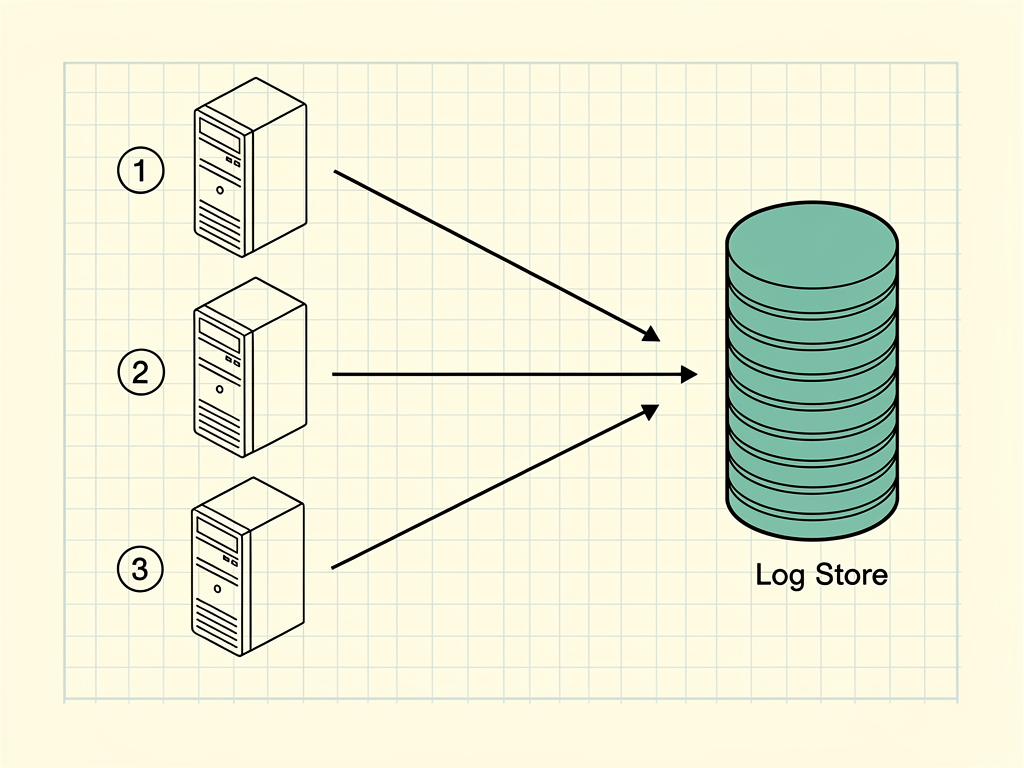
A direct OpenAI integration sends an authenticated POST to https://api.openai.com/v1/chat/completions with a bearer token, a model ID, and a prompt body. To route the same SDK call through your policy gateway, set the SDK base_url to the gateway URL, authenticate the caller there, inspect the HTTP request, apply the route policy, and retain the decision record. The deployment keeps legal and privacy owners responsible for their own evidence obligations; a gateway contributes evidence only for requests that traverse it.
The architectural answer is a gateway between the application and api.openai.com. This guide walks through the implementation.
TL;DR
Set the OpenAI SDK base_url to the gateway, validate the caller there, inspect the routed HTTP request, apply the policy and retain the resulting decision record. The gateway covers traffic that passes through it; application, privacy and legal owners retain the rest of the deployment evidence.
Request path
The gateway sits between the application and OpenAI. The application establishes TLS to the gateway. The gateway establishes a separate TLS connection to api.openai.com, consults its policy and identity services, and writes its decision to the audit store.
TLS A terminates at the gateway, not at OpenAI's edge. The gateway decrypts the prompt body, runs the inspection chain, and re-encrypts to OpenAI over TLS B. The application configures its OpenAI SDK with base_url set to https://ai-gateway.internal.example.com/v1/openai and uses a gateway-issued token as its API credential. The method calls remain on the OpenAI SDK surface. OpenAI documents base URLs and API request authentication for its API clients.
The gateway-issued token carries the verified caller identity. The application no longer holds the OpenAI vendor key. The vendor key is held by the gateway, scoped to the gateway's outbound calls.
Identity model
The gateway expects a JWT or a session token with a verified sub claim. The token resolves to one of three subject types:
- User. A natural person acting through an authenticated application session. Maps to MAP 1.5 of AI RMF.
- Agent-on-behalf. An autonomous agent acting on behalf of a verified principal. The token carries both the agent's identity and the principal's identity. Maps to the agent identity model in Article 26 of the EU AI Act.
- Service. A backend job acting under a service principal. Service requests carry the principal that scheduled the job, not the job runtime.
The identity context is the input to the policy decision. A request without a resolved subject claim fails closed.
Classification
The decrypted prompt body runs through four classification stages. Each stage emits a verdict that the policy engine reads.
1. PII detection
Regex passes for SSN, credit card, phone, email. Named-entity recognition for person names and addresses. A nine-digit number near the literal token SSN is a stronger signal than a nine-digit invoice number, so the classifier carries lightweight context windows for each pattern.
2. PHI detection
The 18 HIPAA identifiers (45 CFR 164.514(b)). MRN, account numbers, full-face photos, dates of birth, geographic subdivisions smaller than a state. PHI detection is separate from PII because PHI carries HIPAA-specific routing rules (route only to BAA-covered endpoints, redact otherwise).
3. Secret detection
API keys, AWS access keys, GitHub tokens, OAuth bearer tokens, private keys (PEM, OpenSSH, PKCS). The detector runs against the prompt body and the system message. A request that carries a secret in the prompt is blocked unconditionally; secrets do not belong in vendor-bound payloads.
4. Prompt-injection detection
Direct and indirect injection patterns (OWASP LLM01). The classifier reads the prompt and any retrieved context the application attached. A high-confidence injection verdict triggers a block or a sanitization rewrite depending on policy.
Policy lookup
The policy engine reads the request context (subject, route, classification verdicts) and returns a decision plus a reason code. The decision is one of:
- Pass. Forward the request to api.openai.com.
- Block. Return a 403 to the application with the policy reason code.
- Redact. Rewrite the prompt to remove the offending field, then forward.
- Route-only. Forward only if the destination route matches the policy's allowed-destination set (used for PHI to BAA-covered endpoints).
The policy bundle is versioned. Each request's audit record stamps the SHA-256 hash of the policy bundle in effect at decision time.
OpenAI route handling
The gateway implements the OpenAI v1 API surface, including chat completions, embeddings, files, image generation and audio transcription. Each endpoint carries a different inspection profile. For chat completions, review messages[*].content. Embeddings require review of input. Files need a scan of the uploaded body. Image generation needs prompt review, while transcription needs review of the resulting text. OpenAI's API reference defines the endpoint request shapes.
Streaming responses (stream: true) require completion-side inspection that runs against each delta chunk. The gateway buffers chunks for the inspection window, applies the policy, and forwards approved chunks to the application.
Audit-record format
Each request produces one record. Keep a unique audit ID; start and end timestamps; the authenticated subject and subject type; the selected route; data classification; policy version; decision and reason code; input and output hashes; input and output token counts; and the record's integrity signature. An example route could be openai/gpt-4o-2024-08-06, with a policy version stored as a SHA-256 identifier.
Write the record before returning the OpenAI response when the policy requires a durable decision trail. A chained HMAC design can provide tamper evidence for the record set. Retention periods come from the deployment's legal and records-management policy; the EU AI Act assigns separate provider and deployer record-keeping duties in Articles 19 and 26.
Failure modes the gateway has to handle
- OpenAI 429. Upstream rate limit. The gateway returns the 429 to the application after writing the audit record with
decision: pass, outcome: upstream-rate-limit. - Policy lookup timeout. The decision point times out. The gateway fails closed; the request returns 503 with
reason_code: policy.fail-closed.lookup-timeout. - Audit-writer error. The audit store cannot accept the write. The gateway fails closed for that request and surfaces an SRE alert. Forwarding a request whose audit cannot be persisted produces the same evidentiary gap as no audit at all.
- Identity verification failure. The JWT is expired or the signature does not validate. The gateway returns 401 with
reason_code: identity.fail.verify.
Performance budget
The OpenAI inference call itself runs 500 ms to 5 seconds. The gateway's added latency budget is 50 ms (P99) across the full inspection chain. The split:
- TLS termination and re-encryption: 4 ms
- Identity verification (JWT validate): 2 ms
- PII classification: 8 ms
- PHI classification: 6 ms
- Secret detection: 3 ms
- Prompt-injection detection: 18 ms
- Policy lookup: 4 ms
- Audit write (synchronous): 5 ms
Total P99: 50 ms. The application's user-facing latency is dominated by the OpenAI call; the gateway's overhead is in the noise floor.
DeepInspect
DeepInspect is an OpenAI-compatible gateway for HTTP traffic between authenticated users or agents and LLM endpoints. Application teams set base_url and route existing SDK calls through the inspection chain. Identity verification, request classification, a versioned policy bundle and a per-decision audit record apply to traffic that passes through the gateway. See AI gateway architecture and LLM audit-log retention for the operating model and retention decisions.
We have a working integration in production for OpenAI deployments at finance, healthcare, and federal-government deployers. The reference architecture is documented end to end.
Book a technical deep dive at deepinspect.ai.
Frequently asked questions
- Does the gateway require code changes in the application?
The application changes one configuration line: the OpenAI SDK's
base_url. The SDK methods (client.chat.completions.create,client.embeddings.create, streaming handlers) are unchanged. The application's authentication switches from the OpenAI vendor key to a gateway-issued token, but the SDK call surface is identical.- How does the gateway handle OpenAI's organization and project headers?
OpenAI's
OpenAI-OrganizationandOpenAI-Projectheaders pass through the gateway transparently. The gateway records the values in the auditmetadatafield for traceability. Outbound to api.openai.com, the gateway uses the deployer's organization-level key, which the application no longer needs to hold.- What is the gateway's behavior on function calling and tool use?
Function-calling completions are inspected on both sides. The gateway classifies the prompt and the tool-call response before returning either to the application. For agentic patterns where the model issues a tool call, the gateway evaluates the function arguments against the policy bundle (a destructive function call with PII arguments may trigger a block).
- Can the gateway run in front of Azure OpenAI as well as OpenAI?
The gateway accepts both Azure OpenAI's REST surface and OpenAI's REST surface. Routing is per-tenant. A deployer that uses Azure OpenAI for HIPAA-covered workloads and OpenAI direct for non-PHI workloads can run both through one gateway with separate policy bundles per route.