Grok Enterprise Security: What API Credentials Do Not Authorize

An enterprise call to the Grok API authenticates with a single API credential shared across an application or team. xAI documents credential management and enterprise data-handling terms, but neither answers which employee or agent originated a given request. This piece maps that request-level gap and what closes it.
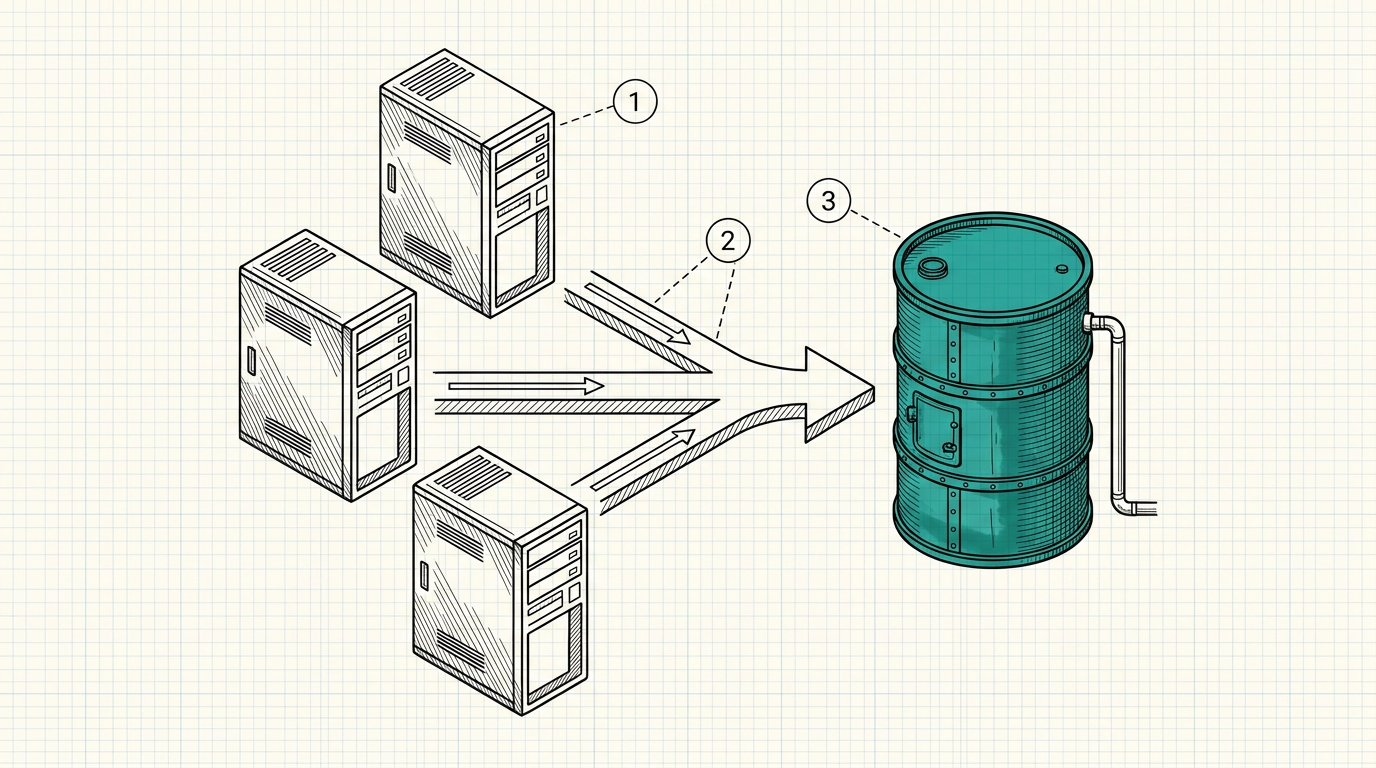
A call to the Grok API arrives at xAI's endpoint carrying a model name, a message payload, and one API key. xAI's API documentation shows that credential in every sample request, in the Authorization: Bearer header, exactly where every other model provider puts it. The credential tells xAI which account is billing for the call. It does not tell xAI, or the enterprise that issued the credential, which of the forty engineers sharing that account actually sent this specific prompt.
I want to walk through what xAI's own controls secure on that request path, and where the gap sits once the request leaves the application and heads for Grok.
TL;DR
- Grok enterprise security starts with API key authentication, which identifies the calling application or account, not the individual employee or agent behind a given request.
- xAI's credential management and enterprise terms cover credential issuance, usage limits, and data handling on xAI's side of the connection.
- A shared credential authorizes every request made with it equally, so a compromised or over-scoped credential looks identical to a legitimate one at the API layer.
- Closing the gap requires the calling application, or a layer in front of it, to attach and enforce identity before the request reaches Grok.
API credentials authenticate the account, not the person
xAI's API reference walks through generating a credential from the developer console and attaching it to every request. That credential is a bearer credential. Whoever holds it can call the API on the account's behalf, and xAI's server has no way to distinguish a request typed by a product manager testing a prompt from one triggered by an automated pipeline running unattended overnight.
This is how API-key authentication works everywhere, Grok included: the credential proves the caller holds a valid credential, and that is the entire claim it makes. An enterprise that provisions one credential per team, the common pattern since rotating credentials per employee adds operational load, ends up with a single credential authorizing dozens or hundreds of people's traffic. I think most security teams know this the moment they read the setup docs, and provision one credential per team anyway, because the alternative feels like more overhead than the risk seems to justify.
What xAI's enterprise terms actually cover
xAI publishes data-handling and usage terms governing how submitted content is retained and used on xAI's side of the connection. Those terms, along with the xAI legal and policy pages, address what happens to a prompt once xAI receives it: retention windows, whether content trains future models, and the account-level obligations both parties accept.
That is a real and necessary layer. It answers "what does xAI do with data I send it." The separate question, whether this specific request should have been sent at all, sits outside that agreement's scope. A data-handling agreement governs the destination. It is blind to the calling application, the employee's role, and whether the prompt contains a customer record that employee's role should never touch. The agreement takes the request as a given and governs what happens next.
The shared-credential problem in practice
Picture a support tool built on Grok, deployed to a 200-person customer service org, authenticating to xAI with one API credential stored in the application's backend. A tier-1 agent pastes a customer's account details into a prompt to draft a response. A tier-3 agent with access to escalated cases does the same, except the escalated case includes a partial card number. Both requests hit the Grok API with the identical credential, and xAI's logs show one account making both calls.
The same pattern applies to agentic workflows. An autonomous agent calling Grok on a schedule authenticates with the service account's credential, indistinguishable at the API layer from a human-initiated call off the application's own dashboard. The AI agent post-authentication gap covers this in more detail: an agent can be fully authenticated to make the call and still be the wrong caller for that particular request.
Where request-level authorization has to live
The fix keeps API credentials in place and adds a layer that consumes the identity context the calling application already has (the logged-in employee, the agent's task, the role each holds) and evaluates that context against the specific request before it reaches xAI's endpoint. Model guardrails are not a security control makes the related point that content filtering inside a model's inference path is a different job from authorizing who gets to send the prompt in the first place. The two operate at different points in the request, and Grok's own safety tuning does not substitute for either.
A zero-trust approach to LLM access treats every outbound call to a model endpoint as a fresh authorization decision rather than a one-time credential check at provisioning. That decision needs the identity behind the credential, the classification of the prompt, and a policy that says what that identity is allowed to send to that model, evaluated inline, before the bytes leave the network.
DeepInspect
This is the gap DeepInspect closes. DeepInspect sits inline between the calling application and the Grok API as a stateless proxy, evaluating the identity context the application supplies, the role attached to that identity, and the classification of the prompt against policy, before the request reaches xAI. The API credential still authenticates the account to xAI exactly as it does today. DeepInspect adds the layer that decides whether this specific request, from this specific person or agent, should have been sent at all.
Every decision, permit, redact, or deny, produces a signed audit entry tied to the actual caller rather than the shared credential that made the underlying call. That record is what a security review needs and what xAI's own logs, tied to one account-level credential, cannot supply on their own. For teams building on Grok's API and asking who inside their own organization is actually behind each request, that record is documented in the companion piece on Grok enterprise audit logs.
xAI's credential management, rate limits, and data-handling terms stay exactly as useful as they are today. DeepInspect adds the per-request, identity-bound decision none of them were built to make. Book a demo today.
Frequently asked questions
- Does rotating my Grok API credential fix the shared-credential problem?
No. Rotation limits how long a compromised credential stays valid, which is worth doing on its own merits, but everyone holding the current credential still authenticates identically to everyone else the moment the new credential is issued. A rotated credential remains one credential shared across every person or process using it, whether that is thirty engineers on a platform team or an automated job running against a cron schedule. xAI's console makes rotation straightforward: generate a new credential, update the application's stored secret, revoke the old one. None of those three steps touches the underlying problem, which is that the API layer has no field for "which employee typed this prompt." The identity gap persists across rotations because rotation addresses credential lifetime and blast radius after a leak, not per-request attribution before one happens. Teams that treat rotation as their identity control are solving a different, real problem while leaving this one open.
- Can I just issue one Grok API credential per employee instead?
You can, and it improves attribution at the account level: a request tied to a named employee's credential traces back to that person faster than one buried in a team-wide credential. It also creates real operational load. Someone has to issue a credential on day one, revoke it the day that employee leaves, and rotate it on whatever cadence the security policy sets, multiplied by every person who touches the Grok integration. A 300-person org running this pattern is running 300 separate credential lifecycles instead of one. And even with perfect credential hygiene, the API still receives a bearer token and a prompt with no classification attached to either. Nothing in that exchange evaluates whether the specific data in that specific prompt should have left the building. Per-employee credentials narrow the shared-credential problem. They do not touch the request-authorization problem sitting underneath it, which needs policy evaluation, not just better credential bookkeeping.
- Does xAI's enterprise data-handling agreement mean my Grok traffic is compliant?
The agreement governs what xAI does with data once received: retention windows, whether content trains future models, and the account-level obligations both parties accept. That is the provider side of the compliance picture, and auditors will ask for it. It says nothing about whether a specific employee should have sent a specific prompt, or whether that prompt contained data their role prohibits sharing outside the company. An auditor reviewing an AI vendor risk assessment typically asks two separate questions: what does the vendor do with our data, and what controls do we have over what our own people send that vendor. xAI's terms answer the first question thoroughly. They cannot answer the second, because that decision happens inside the enterprise's own request path, before xAI ever sees the traffic. Compliance requires both the provider-side handling terms and an enterprise-side authorization decision on each request, and treating the first as a substitute for the second is where most gaps in a vendor review get found.
- Is this gap specific to Grok, or does it apply to other model APIs too?
It applies to essentially every API-key-authenticated LLM provider. The pattern, one credential authenticating a shared application or account rather than an individual person, is how bearer-token API authentication works generally, and it predates LLM APIs by a couple of decades. Payment processors, cloud infrastructure APIs, and SaaS platforms all use the same mechanism, and enterprises have built layers on top of most of them (scoped tokens, request signing, application-level user tracking) to close exactly this gap. LLM APIs are newer, so fewer enterprises have built that layer yet, and the prompts crossing the wire tend to carry more sensitive, free-form content than a typical infrastructure API call. Grok is a current, concrete example of a pattern that shows up whenever an enterprise integrates any hosted model API behind one set of credentials. The fix looks the same regardless of which provider sits on the other end of the connection.
- What should a security team ask before approving a Grok integration?
Start with where identity context gets captured relative to the request: before it reaches xAI's endpoint, or only reconstructed afterward from application logs. Find out who inside the organization can produce a record of which employee or agent sent which prompt, on what date, containing what kind of data, without pulling server logs and cross-referencing timestamps by hand. Press on what happens operationally if the shared credential leaks: does every integration using it get revoked at once, and what breaks when it does. Whether the current setup can tell a routine support query apart from a prompt containing a customer's financial details is worth a direct answer, not a shrug. If the honest response to any of those routes back to "check the API credential" or "look at the application logs after the fact," the integration is missing the request-level authorization layer that a credential alone was never built to provide. The review should treat that as an open finding rather than an accepted risk.