DeepSeek Security at the AI Request Boundary

DeepSeek security depends on controls at several layers. The request boundary needs authenticated identity, delegated authority, prompt classification, route policy, and decision evidence. Provider configuration, local execution, and credential security remain adjacent responsibilities with different owners.
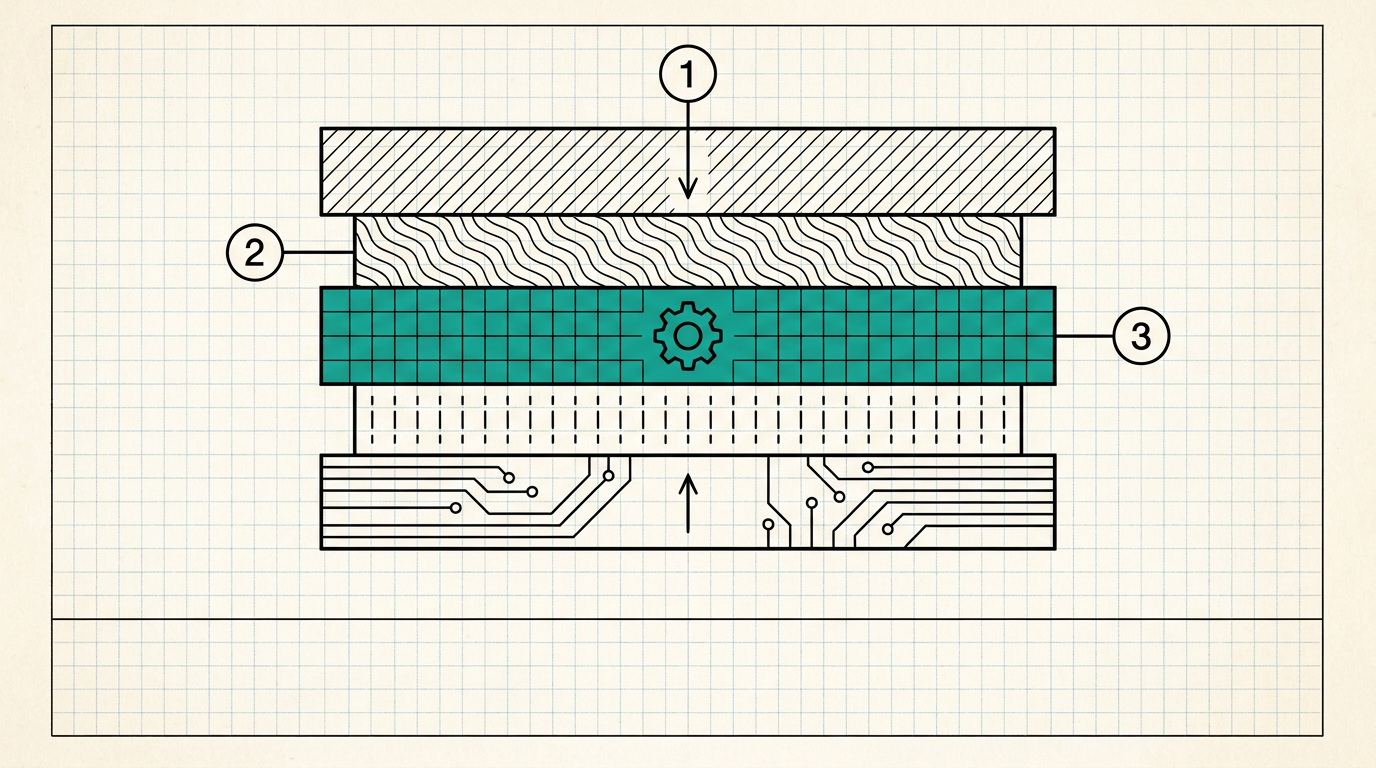
A DeepSeek endpoint receives an HTTPS request containing a model choice, messages, parameters, and an API credential. The security decision that matters to an enterprise begins earlier: which authenticated caller initiated this request, what data sits in its context window, and which policy governs that route. DeepSeek's API documentation is the starting point for the provider-facing interface; the enterprise still owns authorization for its use. I would draw this architecture as a narrow corridor on a whiteboard. On one side sits an employee or agent with a task. On the other sits the DeepSeek model endpoint. Every request crossing the middle needs a decision that a security team can explain later.
TL;DR
- DeepSeek security begins with an authenticated caller and delegated authority, plus prompt classification and policy enforcement on each HTTP model request.
- A shared API key identifies a service; the application must supply the originating user or agent context for identity-aware authorization.
- Local execution and provider configuration, plus credential protection, require endpoint, IAM, CI/CD, and provider-administration controls alongside request policy.
The request path
The relevant DeepSeek security path is specific. An authenticated user or agent asks an application to perform work. The application builds an HTTP request, selects a DeepSeek route, and sends the prompt to the provider. A request-bound policy layer evaluates the supplied identity and role, delegation context and data classification, plus the permitted route before the provider receives the traffic.
NIST's AI Risk Management Framework gives teams a useful way to organize this work through Govern and Map, then Measure and Manage. The request path supplies concrete inputs for each function. Governance assigns policy ownership. Mapping identifies the caller and model, plus data use. Measurement classifies the prompt and records the decision. Management applies the resulting permit or redact, or deny action.
This is a security control at the AI API call layer. It governs a particular request at a particular moment, rather than relying on a broad statement that approved employees may use a model. The identity-aware proxy for LLMs article describes the post-authentication gap that appears after a user has signed in but before the model receives sensitive context.
Identity and delegated authority
An API credential authenticates the calling service to DeepSeek. It gives the provider a stable account association. Enterprise authorization needs another layer of context: the human or agent on whose behalf the service is acting, the role that person or agent holds, and the authority delegated for this request.
The NIST software and AI agent identity and authorization project makes this distinction concrete through agent identity and delegated authority, plus action lineage. For a DeepSeek-backed assistant, the application should pass a verified caller identity and relevant role or entitlement context to its policy layer. The policy layer can then decide that an HR analyst may summarize an approved case file while a general support role receives a different route or a denial.
That decision belongs beside the outbound HTTP call because prompt content and selected model route are visible there. An IAM platform remains responsible for authenticating the caller and issuing trusted identity context. The request policy consumes that context and evaluates the AI use at the point where data leaves the application.
Prompt classification and route policy
DeepSeek security also depends on the content of the prompt, not merely the model name. A user can be fully authenticated and still assemble a context window containing customer records, source code, financial data, or an unapproved instruction. Prompt-level classification gives the policy engine an object to evaluate before the API request proceeds.
Route policy should be explicit. Teams can define permitted DeepSeek models, allowed data classes and identity groups, plus approved use cases for each route. A production support assistant and a research sandbox should carry separate policies because their callers and data, plus evidence needs, differ. The AI data residency controls article shows how route selection can become an enforcement decision when a policy includes location or provider requirements.
DeepSeek's privacy policy belongs in that design review. Security and privacy teams, plus legal teams, should understand the provider terms that apply to their chosen DeepSeek service and account before approving data classes for a route. The policy decision remains an enterprise responsibility even when the provider documents its own handling practices.
Evidence after the decision
A security control without a retrievable record leaves incident response and assurance teams reconstructing events from fragmented application logs. Each permitted or redacted, or denied DeepSeek request should create a record that carries the authenticated principal, relay identity, model route, classification, policy version and timestamp, plus outcome. Correlation IDs join that record to the application transaction and relevant provider evidence.
I think teams routinely underfund this part because a successful model response feels like the end of the transaction. It is the beginning of the evidence problem. During a customer security review, the useful artifact is the record showing which identity was authorized under which policy when sensitive data approached a model endpoint.
A paper notebook beside the incident lead's laptop should never be the best record of an AI request. The signed audit logs for AI requests article lays out why write-path independence and tamper-evident records matter when the application itself made the call.
Adjacent control ownership
DeepInspect governs HTTP traffic between authenticated callers or agents and LLMs. On a routed DeepSeek request, it can evaluate application-supplied identity and delegation context, inspect the request for policy purposes and enforce a decision, then emit a per-decision audit record.
Several DeepSeek security concerns live outside that boundary. Local execution belongs to endpoint and workload controls. API-key generation, storage and rotation, plus revocation, belong to IAM, secret-management, and provider-account administration. CI/CD review, dependency integrity and network segmentation, plus application authorization, each require their own owners and evidence. That division is a strength because it keeps the control map testable.
DeepInspect
DeepInspect provides the request-boundary enforcement layer for HTTP traffic between authenticated users or agents and LLM APIs, including routed DeepSeek calls. It evaluates the identity context supplied by the application alongside role and delegation, route and data classification, plus policy. The resulting per-decision record gives a security team evidence of what was permitted or redacted, or denied.
A complete design pairs that layer with sound provider administration and identity management, secret handling and application security, plus endpoint controls. The ownership lines remain visible during architecture review instead of disappearing into a generic security claim. Book a technical deep dive at deepinspect.ai.