C2PA Content Credentials: An Implementation and Handoff Checklist

C2PA Content Credentials bind signed provenance claims to media through manifests and assertions. This implementation checklist covers assertion design, manifest creation, signing identity, trust configuration, validation, export handoff, and operating ownership. It also defines the boundary between media provenance tooling and an HTTP AI policy gateway.
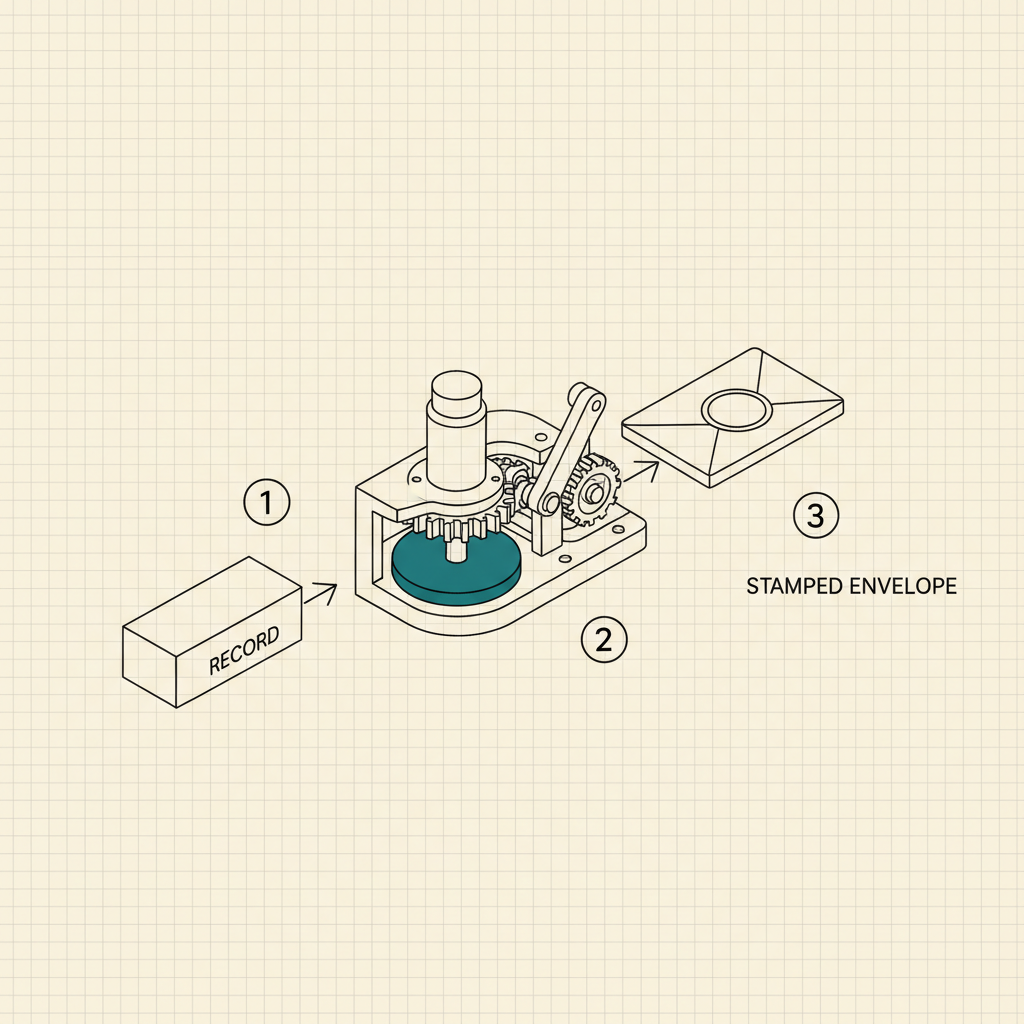
C2PA Content Credentials attach provenance information to a media asset through a manifest containing signed claims and assertions. The implementation succeeds only when the credential survives the asset's real path: creation, edit, and export followed by distribution and retrieval. Publication and validation complete the path. A manifest that validates inside the creative tool but disappears when a publishing service recompresses the file has failed at the handoff.
This checklist treats C2PA as a media-provenance implementation owned by the asset pipeline. DeepInspect does not create or embed C2PA manifests, and it cannot sign or preserve them. It also does not discover or validate them. Its boundary is authenticated HTTP traffic sent to an LLM endpoint, which is adjacent to content creation and materially different from file provenance.
TL;DR
- Define the provenance statements and required assertions before selecting a library or signing service.
- Create manifests at meaningful lifecycle events, bind them to the asset, and preserve ingredient relationships across edits.
- Separate signing-key custody from trust-list policy, then test expiration, revocation, and an unknown signer.
- Validate after every service handoff, including export and storage plus delivery, publication, and derivative creation.
- Keep C2PA generation and validation in the media pipeline; an HTTP AI gateway governs routed model calls and cannot supply file provenance.
C2PA Content Credentials start with a provenance statement
The C2PA 2.3 specification set defines technical documents for Content Credentials, attestations, and related bindings. Begin by writing the statement the credential must support. For a generated image, that might identify the creation action, the digital source type, the claim generator, and the source ingredients used by a later edit. For a newsroom asset, the statement may also need the capture origin and the sequence of approved edits.
Assign owners to each field. The generation service knows which model and operation produced an asset. An editor knows which crop or tonal adjustment was applied. Rights staff know the licensed source reference, while the signing service knows which organizational identity is authorized to attest. Combining these facts inside one application account creates a weak provenance process because nobody can distinguish asserted media history from administrator convenience.
I would block launch if the team cannot say, in one sentence, what a valid credential proves. Cryptographic validity proves that signed bytes and claims have retained integrity under the validation rules. It does not prove that the depicted event happened or that every assertion is true.
Assertions need a controlled vocabulary
C2PA guidance defines an assertion as labelled data representing a statement an actor makes about an asset. The implementation guidance says a standard manifest has to contain at least one actions assertion describing creation or opening for edit. When creation includes content, the action also carries an appropriate digital source type.
Create an assertion catalogue before implementation. For each assertion, record its label, schema version, producer, and required inputs. Add the privacy review and retention need. Use standard labels when they express the statement. An organization-specific label needs a documented namespace and compatibility plan. Changing an assertion's schema or serialization under the same label leaves validators unable to tell which contract they received.
Keep personal data out unless it is needed for the provenance purpose and approved for distribution. A credential can travel far beyond the system that created it. Device identifiers and employee names may become public metadata, alongside internal project codes and storage paths. The privacy review belongs at the assertion-design stage, rather than after a credential has shipped inside thousands of files.
Manifest creation belongs at significant events
The guidance recommends creating a manifest when a significant asset event occurs, such as initial creation or export from an editing tool. Manifest creation carries work because the claim must be signed and credentials may need to be retrieved from an online service. Fewer meaningful manifests also reduce validation work compared with a new manifest for every minor interface action.
Define the significant events for your workflow. A model generation can create the first manifest. An approved composite can create another manifest that references source ingredients. A newsroom export can add the editorial action and sign under the publisher's authorized identity. A metadata-only correction may use the update-manifest mechanism where the specification permits it.
Test the manifest store and content binding on the actual media formats you ship. On a desk, put the original image beside the exported derivative and a copy downloaded from the delivery network. Use a validator on all three. The active manifest, ingredient relationships, and expected assertions should remain discoverable. The three files look nearly identical to a reviewer, which is precisely why the credential path has to carry the distinction.
Ingredient relationships preserve edit history
An edited asset needs a link to its source ingredient when the workflow claims continuity. The relationship should identify the source manifest and state how the new asset relates to it under the C2PA model. Preserve the ingredient reference when an editor crops a photograph, composites approved elements, or exports a derivative format.
Avoid treating filenames as provenance identifiers. A copied name can describe unrelated bytes, while a renamed file can still descend from the same ingredient. The content binding and manifest references carry the technical relationship. Your asset management system can keep its own record ID and store it in an approved assertion or external mapping, subject to privacy and disclosure rules.
The acceptance fixture should include one original, one legitimate derivative, one derivative with its manifest removed, and one file whose bytes change after signing. Record the validator result for each. That set proves the team can tell an intact chain from a missing credential and a tampered asset.
Signing and key custody need named owners
A claim generator signs the manifest through an authorized credential. Design key custody as a production security service. Record who can request a signature, which workload identity authenticates the request, where private keys reside, how authorization is approved, and how every signing event is logged. Use short, reviewable permissions and a documented emergency suspension path.
Separate the creative application's ability to submit a signing request from administrative control over the signing identity. A compromised editor account should not be able to issue credentials under every publisher identity. Bind the signing request to the asset hash, assertion set, workflow identity, and release record before the signature is returned.
Run a rotation and recovery exercise. Sign a fixture with the current credential, rotate to the next credential, validate both under the intended trust policy, then revoke or distrust the test credential and confirm the expected failure. Keep the old public validation material for as long as legitimate assets signed under it must remain verifiable.
Trust policy determines what a valid signature means
Signature verification establishes integrity and signer identity under a certificate path or other supported trust mechanism. The relying application still needs a policy describing which signers it accepts for which claim types. A valid signature from an unknown organization may be technically sound and outside the relying party's approved trust set.
Document trust anchors, accepted credential profiles, time handling, revocation behavior, and the response to an unavailable trust service. Decide how the user interface distinguishes a valid trusted credential, a valid untrusted credential, an expired or revoked signer, an unsupported assertion, a missing manifest, and a failed content binding. Collapsing those states into verified and unverified hides the reason an asset failed review.
Trust policy changes need versioning. Store the validator version, policy version, trust-list snapshot or reference, validation time, and detailed result. A later investigation can then reconstruct why an asset passed on its publication date even if the current trust configuration has changed.
Validation runs at every external handoff
Validate on ingestion, after editing, after export, after storage retrieval, after content-delivery processing, and after a downstream platform returns the asset. This catches the service that strips or invalidates the manifest. Run the tests against each enabled transformation, including resizing, transcoding, metadata normalization, thumbnails, and format conversion.
The handoff contract should identify accepted file formats, manifest-discovery method, maximum credential size, transformations the receiver may apply, failure response, and evidence returned to the sender. If a social or publishing platform strips the credential, preserve a separately retrievable manifest only through a C2PA-supported mechanism and test discovery. A database row saying C2PA present cannot substitute for validation of the delivered asset.
Store the validation result beside the release record. Include asset identifier, digest, manifest identifier, signer result, content-binding result, assertion warnings, validator version, policy version, timestamp, and final disposition. AI output provenance covers the wider distinction among file credentials, watermarks, and enterprise request records.
The publishing handoff needs one release owner
Name a release owner who can stop distribution when credential validation fails. That owner reviews the final exported asset, rather than a pre-export working file. Next, the release check retrieves the exact object scheduled for publication through the same storage path the public service will use.
After publication, fetch the public asset and validate again. Save its URL and digest with the prepublication result. If a delivery service creates multiple derivatives, sample each configured derivative family and keep the expected credential behavior in the service contract. The media-publishing audit trail guide places that file-level evidence beside editorial and request-level records without merging their meanings.
Plan the failure route before launch. Quarantine an asset with a broken binding. Re-export an asset whose manifest was lost before signing. Escalate a trust failure to the credential owner. Publish without a credential only under a named exception with a documented reason, if policy permits it.
The HTTP AI gateway boundary stays explicit
C2PA components operate on media assets, manifests, assertions, signatures, bindings, and validation. DeepInspect operates on authenticated HTTP requests and responses routed through its AI policy gateway. It can evaluate whether a caller may send a prompt or source material to an LLM endpoint and write the policy decision. It cannot add a C2PA manifest to the generated file after the model responds.
The handoff between the layers is a correlation design. A generation application can retain the DeepInspect request ID in its internal release record, then pass the resulting asset to a C2PA claim generator. That claim generator creates and signs the manifest under the media workflow's rules. Keep the C2PA manifest identifier and request ID linked in the release system if privacy and disclosure policy permit it. AI security for marketing content shows where request governance fits around a content workflow.
This boundary prevents a dangerous shortcut. A permitted model call proves only that the routed request satisfied the active enterprise policy. A valid Content Credential proves integrity and signer claims under the validator's rules. Neither record absorbs the other's job.
DeepInspect
DeepInspect can govern the routed model request that begins a media-generation workflow. It evaluates the identity context supplied by the application, the source data, the selected model route, and the active policy before the call proceeds. Its signed decision record can carry a correlation value into the internal release system.
The C2PA claim generator then performs a separate job on the resulting asset. It assembles assertions, creates the manifest, binds it to the media, and obtains the authorized signature. A validator checks that credential after each handoff. Keeping those records separate gives engineers a clean control map and gives reviewers evidence with precise scope.
Book a demo today.
Frequently asked questions
- Does a valid C2PA credential prove an image is true?
A valid credential does not prove the depicted event is true. Validation checks the manifest, signature, bindings, assertions, and trust conditions. It can show that an identified actor signed specific provenance claims and that protected content retains the expected binding. Factual verification of the depicted event remains an editorial or investigative task.
- When should an application create a new manifest?
Use significant lifecycle events defined by the workflow, including initial creation and an approved export. An edit that changes the asset and its provenance record may require a new standard manifest. A metadata-only change may fit an update manifest under the specification. Document the chosen events and test them.
- What happens when a platform strips the credential?
The delivered asset loses the embedded or attached discovery path unless a supported external mechanism remains available. Detect the loss by validating the retrieved public asset. Then change the transformation, use a supported manifest-discovery option, or record a named exception according to policy.
- Who should hold the C2PA signing credential?
A controlled signing service should hold the credential under a named security owner. Creative and generation applications can submit authorized signing requests with the asset binding and approved assertions. Keep administrative key control separate from ordinary editor access, and test rotation plus revocation.
- Can DeepInspect generate or validate Content Credentials?
DeepInspect cannot generate or validate Content Credentials. It governs authenticated HTTP traffic sent to LLM endpoints and records its policy decisions. C2PA manifest creation, embedding, signing, trust evaluation, and validation belong to the media asset pipeline and its provenance tools.