Claude Connectors Audit Logs: Evidence for Remote MCP Tool Calls

Claude connectors let Claude call approved remote MCP servers. Audit evidence for that flow must distinguish the Claude request, the connector authorization, the remote tool action, and the application record. This article shows what each system can prove and where an independent request-level policy record fits.
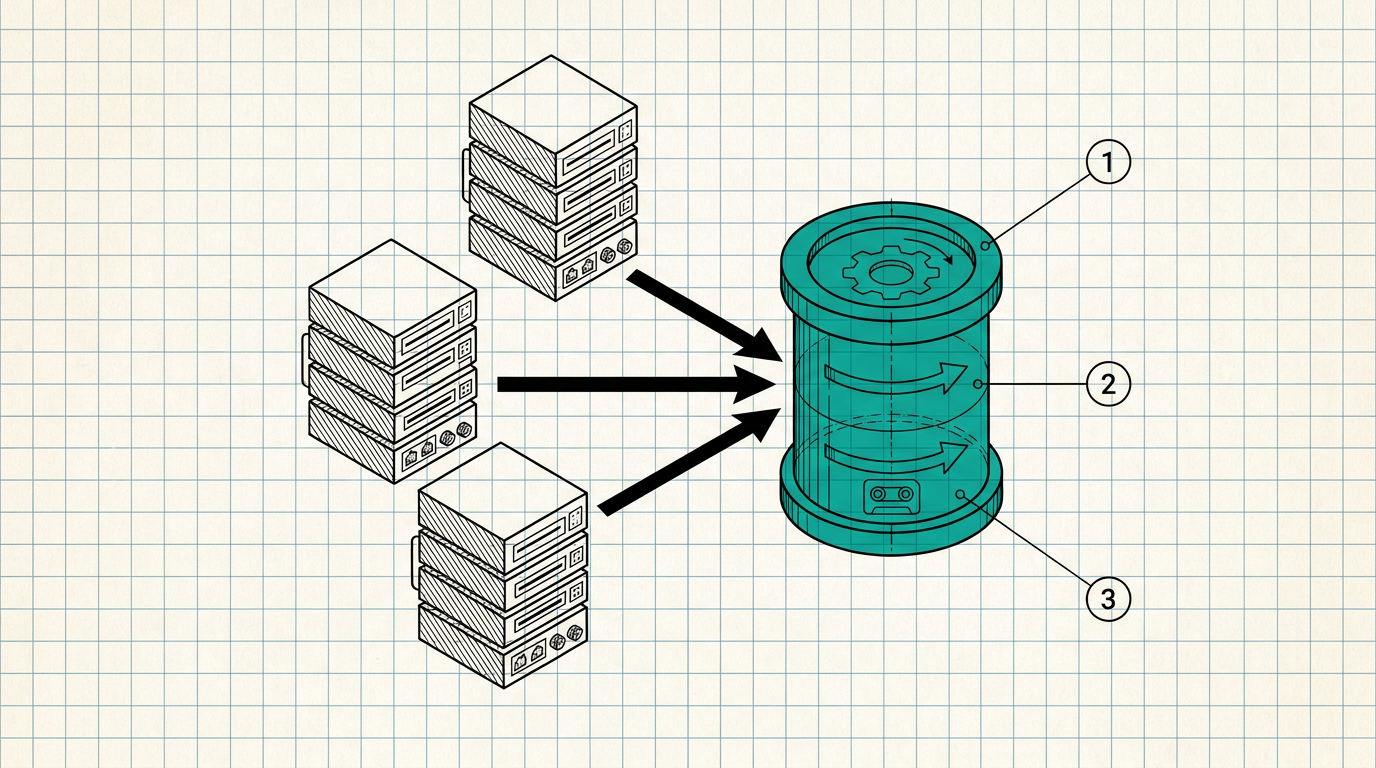
Claude connectors turn a model request into a remote tool call. The application sends Claude a request, Claude selects a connector, and the connector reaches a remote Model Context Protocol server with the authority that server accepts. A useful audit trail has to preserve those boundaries. A single application event saying that an agent completed a task leaves too much of the decision path in the dark.
I would draw this as four boxes before choosing a logging product: caller identity, model request, connector authorization, and remote tool action. The whiteboard marker matters because teams often merge those records after an incident, when they need them most.
TL;DR
- Claude connector evidence needs separate records for the authenticated caller, the model request, the connector authorization, and the remote MCP server action.
- Anthropic usage reporting can establish API consumption, while a remote MCP server records the tool action it receives.
- A request-layer policy record establishes what an authenticated caller was permitted to send to the LLM endpoint at that moment.
- DeepInspect can record decisions on routed HTTP AI traffic, while connector and MCP logs retain their own operational evidence.
Connector request path
Anthropic documents the MCP connector as a way for Claude to connect to remote MCP servers. The connector is part of the Claude API request flow. The caller supplies the remote server configuration. Claude can discover available tools and use them while responding to the request.
The MCP specification describes the wider protocol as a client-server system covering tools and resources, with prompts handled through the same protocol. Its authorization specification puts authorization between an MCP client and a protected resource server. That is useful context for an audit design. The MCP server decides what its authorization accepts. The application decides which connector configuration it sends. The model chooses a tool within the context it receives.
Each of those decisions has a different owner. Treating them as one event produces a record that is tidy and hard to investigate.
Evidence at each boundary
The application can record the user session and business action, along with the connector configuration it requested. It should retain a stable request identifier that travels into its own tracing system. The application record remains valuable, although the application is writing a statement about itself.
Anthropic provides organizational usage and cost reporting through its Usage and Cost API. That reporting helps an administrator reconcile consumption and API activity over a selected period. It should be evaluated for the reporting fields, retention behavior, and administrative access available to the enterprise account.
A remote MCP server should record the tool invocation it actually receives. For a connector that searches a document repository, the server-side record can show the requested tool, the server identity, the authorization subject it accepted, the time, and the action outcome. The server cannot establish every attribute of the human or workload that began the Claude request unless that context is deliberately passed and protected.
A request-layer policy record answers another question. It records whether an authenticated caller was allowed to send a classified prompt to a selected LLM route under the policy active at that time. That is the same distinction described in the post-authentication gap: successful authentication supplies an identity, while authorization decides what that identity may do with a particular request. LLM egress monitoring explains the inspection point on that outbound path.
Audit design for remote tools
A production review should ask for correlation, not a promise that one vendor log will explain the entire flow. Start with a request ID issued by the calling application. Carry it through application telemetry and connector configuration, then into the remote MCP server where the protocol permits it. Record the identity context and the policy version at the point that makes each decision.
The record set should establish these facts without inference:
- The authenticated user, workload, or agent that initiated the business action.
- The LLM endpoint and connector configuration selected for the request.
- The remote MCP server and tool invoked during the model run.
- The authorization subject accepted by that remote server.
- The policy outcome for the HTTP AI request and the timestamp for that outcome.
The physical detail is mundane but revealing: during an incident review, someone will have three browser tabs open, one for the application trace, another for the model provider report, and a third for the MCP server log. Correlation fields turn that search into an investigation. Missing identity context turns it into a reconstruction exercise.
I have a strong opinion here. A tool invocation log is valuable evidence, but it should never become a substitute for the authorization decision that allowed the AI request to proceed. The records describe different actions.
DeepInspect
DeepInspect operates on HTTP AI traffic deliberately routed between authenticated users or agents and LLM endpoints. It evaluates identity context, role, data classification, model authorization, and organizational policy before the request reaches the model. The resulting per-decision audit record is signed and tamper-evident, with a write path independent of the calling application.
A connector deployment still needs its application and MCP server logs. DeepInspect contributes the request-level evidence for the model call, including the policy state that governed that routed request. That makes the handoff between an approved caller, an LLM request, and a remote tool call reviewable without claiming that one control owns every boundary. Book a technical deep dive at deepinspect.ai.