Okta AI Gateway Integration: Validate Identity Before LLM Routing

An Okta AI gateway integration should validate the caller access token, derive a small policy context from trusted claims, and make an authorization decision before sending an HTTP request to an LLM provider. This guide defines the request path, claim mapping, denial behavior, evidence record, and the boundary that keeps tool and business API authorization with their resource servers.
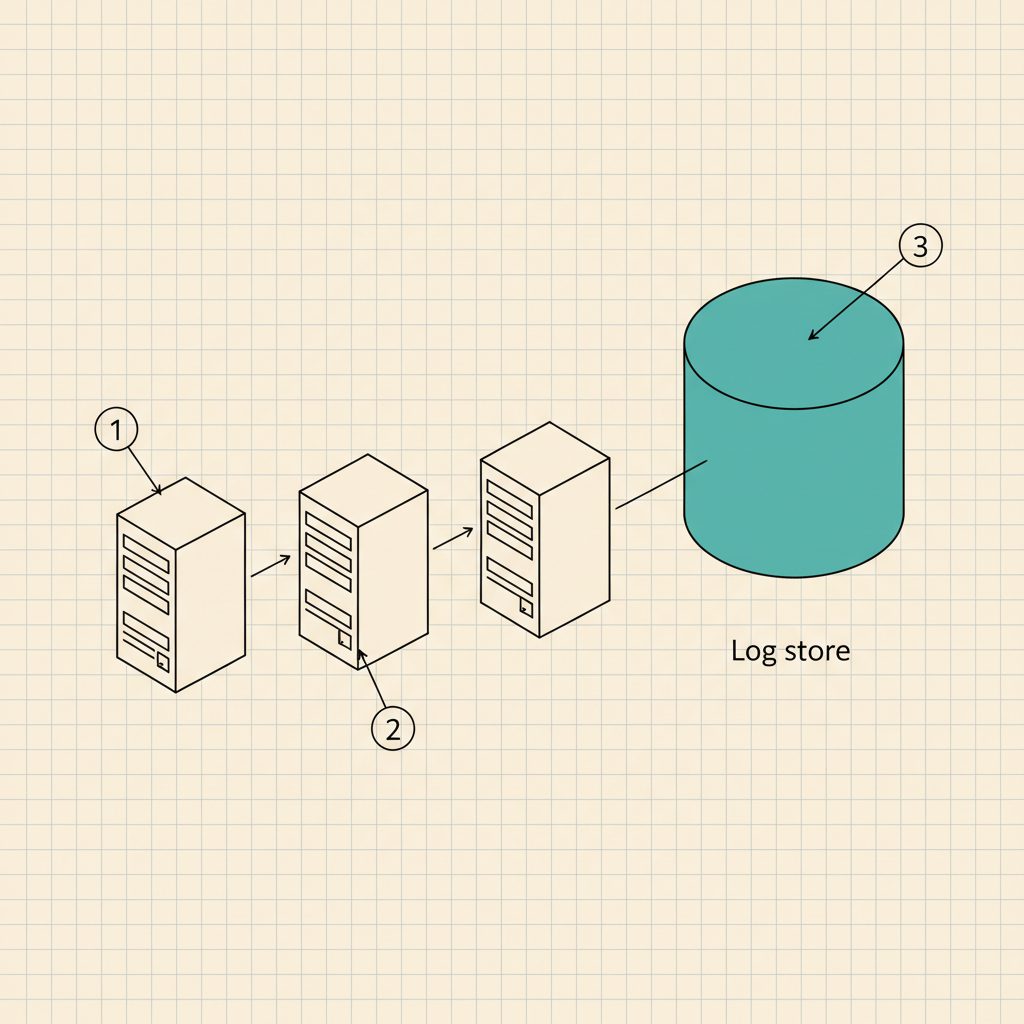
An Okta AI gateway integration has one decisive control point: the customer-operated gateway validates the caller's access token and converts trusted claims into policy inputs before it sends an HTTP request to an LLM provider. The gateway can then decide whether that subject may use the requested model with the supplied prompt context. Tool calls and business API requests follow separate authorization paths at their own resource servers.
That separation prevents a common design mistake. A valid Okta token proves facts about a caller and the token's intended resource. It does not grant every authenticated AI agent access to every model and prompt class across every tenant and data category.
TL;DR
- Validate the Okta access token at the customer gateway before any deliberately routed HTTP request reaches an LLM provider.
- Verify the signature and issuer, then confirm the audience and expiry along with the application-specific claims required by policy.
- Translate only trusted claims into a small policy context, then record the subject and route along with the policy version, decision, and reason.
- Keep tool calls and RAG retrieval outside this gateway decision, along with business API authorization, unless their own HTTP traffic is separately routed and governed.
The request path has one LLM decision point
Put the AI gateway between the application or agent runtime and the LLM provider endpoint. The client sends its Okta access token to the gateway in the authorization header. The gateway validates that token, normalizes approved claims, evaluates the request, and either rejects it locally or creates a provider-bound request with the enterprise's provider credential.
A useful sequence has six stages:
- The user-facing application or agent obtains an access token minted for the gateway resource.
- The client sends the token and the intended LLM request to the customer gateway.
- The gateway verifies the token and builds a policy context from allowed claims.
- The policy engine evaluates identity, route, model, tenant, prompt classification, and any approved application context.
- A denied request stops at the gateway. An approved request is translated into the provider's HTTP shape and sent with a provider credential that stays server-side.
- The gateway records the decision and returns the permitted response to the client.
The AI API gateway architecture guide covers the broader proxy pattern. Okta supplies identity assertions for this design. The gateway remains responsible for the model-use decision.
Okta access token validation comes before claim mapping
Okta's access token validation guide describes local and remote validation. Local validation retrieves and caches the authorization server's JSON Web Keys, decodes the JWT, verifies its signature, and verifies its claims. Remote validation uses the token introspection endpoint and can confirm whether a token remains active, including after revocation.
Use an access token for the gateway resource. Okta distinguishes access tokens, which authorize access to a resource, from ID tokens, which communicate authentication information to a client. Accepting an ID token at the gateway confuses those roles and leaves the resource server without the intended authorization credential.
The issuer also determines how the gateway should treat the token. Okta warns that access tokens from an org authorization server are for Okta to consume and should be treated as opaque by customer applications. A customer API that validates JWTs should use tokens from the appropriate custom authorization server and enforce its configured access policy.
At minimum, validation should cover the signature and issuer, plus the audience and expiry, along with any client identifier or custom claim required by the gateway contract. Reject an unknown issuer or a token minted for another API. Also reject an expired token or a claim set that cannot satisfy the policy input schema. Cache keys according to the authorization server metadata and provide a controlled refresh path for rotation.
Trusted claims become a bounded policy context
The gateway should map verified claims into a deliberately small internal object. A practical context can include the stable subject identifier and tenant or organization identifier, approved group or entitlement values, client ID, token issuer, and token audience. The request adds the selected LLM route and model alias, plus the operation and prompt classification.
Avoid passing the full token payload into a general policy language and hoping every policy author remembers which fields are trustworthy. Define an allowlist of claims and expected types, with maximum lengths and normalization rules. Reject duplicate or malformed values and any unexpectedly broad values before policy evaluation. Preserve the original subject and issuer in the decision record so investigators can trace the normalized value back to its source.
Group membership often needs another layer of care. A group name such as engineering can be meaningful only inside the tenant and authorization server that issued it. Map it to an internal policy principal that includes that namespace. The per-role AI policies guide explains how an identity attribute becomes a model and data-use rule rather than a generic login fact.
Claims can establish caller context. Application-supplied facts still need their own trust rule. A client-provided label that says a prompt contains public data carries little weight unless a trusted classifier or upstream control produced it. Keep token-derived identity and gateway-derived request facts separate from application assertions so policy can treat them differently.
Policy binds identity to the LLM route
A token passing cryptographic validation should enter an authorization check, not a default allow path. The gateway decision should bind the verified subject to a specific provider-bound operation. Useful inputs include the model alias and provider route, the tenant and application, the prompt classification and requested response mode, plus the policy version.
Suppose an internal research agent presents a valid token with a finance entitlement. The gateway policy may permit a company-approved model for public market research while denying a route that sends restricted deal data to an unapproved provider. Both requests come from the same authenticated principal. Their data context and destination produce different decisions.
Keep model aliases under gateway control. A policy that authorizes approved-general-model should resolve that alias to an exact provider and model configuration after the decision. Letting the client replace the provider host or raw model identifier can bypass the route that policy approved. The gateway should also strip inbound provider credentials and attach its own credential only after authorization.
This pattern extends the identity-aware AI gateway architecture with an Okta-specific trust path. Okta establishes the signed identity context. The customer gateway evaluates whether that context permits this LLM request.
Denial behavior should be explicit and local
Reject invalid tokens before reading or forwarding more of the prompt body than the gateway needs for the decision. Return an authentication error for a missing or malformed token and for an expired or unverifiable token. Return an authorization error when a valid subject lacks permission for the model route or request context. Keep those outcomes separate in telemetry because they point to different fixes.
A signing-material refresh failure needs a defined operating mode. A gateway can continue using a still-valid cached set for a bounded period while treating an unknown kid value as unverifiable. A blanket fail-open path would turn an identity dependency failure into ungoverned LLM access. Document the cache lifetime and refresh trigger, plus the timeout and recovery test, as part of the deployment review.
Remote introspection offers current token status at the cost of another network dependency on each validation. Local validation avoids that request but may accept a signed token until its expiry unless the system adds another revocation strategy. Choose the validation mode from the revocation requirement and failure model, then test disabled users and revoked tokens, rotated signing material and unavailable introspection, plus audience mismatch and clock skew.
The response must never expose provider credentials or raw signing material, internal policy source, or sensitive prompt classifications. A stable denial code and request correlation identifier give the client enough information to handle the result while preserving server-side detail for operators.
The evidence record should explain the decision
Record one decision artifact before forwarding an approved request. It should identify the request and verified subject, the tenant namespace and authorization server, the token audience and client, the gateway route and resolved provider and model, plus the policy version, outcome, reason code, and timestamp. Store a reference to prompt classification rather than raw prompt content when retention policy excludes payloads.
A denial record should use the same schema where possible. Consistent fields let the security team distinguish bad tokens from valid callers requesting prohibited routes. They also support a direct test: given the same normalized identity and request context under the same policy version, can the reviewer explain why the gateway allowed or denied the call?
Avoid logging the bearer token. It is a credential, and copying it into application logs expands the places from which it can be stolen. A one-way token fingerprint may support correlation if the security design requires it, but the subject and issuer, token audience, and gateway request ID usually provide safer investigative anchors.
Commit the authorization result before sending the provider-bound request. If the gateway crashes after forwarding but before writing evidence, the record will miss an action that actually occurred. The tamper-evident AI audit log guide covers integrity controls for the resulting event stream.
Tool and API authorization stays with each resource server
Auth0's AI Identity for B2B overview separates user authentication and delegated calls to first-party and third-party APIs, along with asynchronous approval and document-level authorization for RAG. That separation is useful when drawing an Okta AI agent architecture. Identity can flow across components without collapsing their authorization decisions into one gateway rule.
The AI gateway described here governs a deliberately routed HTTP call to an LLM endpoint. It does not authorize a calendar write or CRM update, a payment action or MCP tool invocation, or a document retrieval merely because the agent's model call passed. Each tool or API remains a resource server and must validate its own credential and audience, delegated scope and target object, plus the requested action.
RAG has the same boundary. The retrieval service decides which documents the subject may read. The AI gateway can govern the later HTTP request that sends approved context to an LLM, including provider and data-class rules, but it should not invent document permissions or treat a model-route allow as retrieval authorization.
Draw these as separate arrows in the architecture review. One arrow reaches the LLM through the customer gateway. Other arrows reach tools and APIs, plus retrieval services through their respective authorization layers. This preserves a clear owner for every decision and prevents an LLM access token from becoming an all-purpose agent credential.
Deployment checks should prove the negative path
A successful prompt proves only the happy path. The acceptance test should preserve request and decision identifiers for both permitted and denied cases. Use real tokens from the intended custom authorization server and exercise the same route configuration that production clients will call.
Test at least these cases:
- a valid token with the expected issuer and audience, plus the expected client and entitlement;
- a valid token for the wrong API audience;
- an expired token and a token signed under rotated signing material;
- a valid user whose role cannot use the requested model or provider;
- a client that attempts to override the provider host or model alias;
- an unavailable JSON Web Key Set endpoint or introspection endpoint under the documented failure mode;
- a permitted LLM request followed by a tool call that must pass its own authorization check;
- an approved retrieval result whose later provider route is denied by data policy.
For each case, verify the client response and whether a provider request occurred, then verify the stored reason code. The strongest denial test confirms that the LLM provider received no HTTP request. A log message alone cannot prove that the gateway stopped the traffic.
DeepInspect
DeepInspect sits on the deliberately routed HTTP path between authenticated users or agents and LLM provider endpoints. The gateway can use verified Okta-derived identity context alongside the model route and data classification, plus the policy version, to make an inline pass or block decision before sending the request.
Tool execution, business API authorization, and retrieval permissions remain with their resource servers. For the LLM call itself, DeepInspect produces a separate decision record tied to the subject and request, policy, and provider route.
Book a technical deep dive at deepinspect.ai.
Frequently asked questions
- Should an AI gateway accept an Okta ID token?
No. The gateway is a resource server for this request path and should accept an access token minted for that resource. Okta describes ID tokens as authentication information for clients, while access tokens authorize access to a resource. Validate the access token's signature and claims before mapping any value into policy.
- Should the gateway validate tokens locally or through introspection?
Local validation reduces the per-request dependency on Okta by using cached JSON Web Keys, but a signed token may remain usable until expiry without another revocation mechanism. Introspection adds a network call and can confirm current active status. Choose according to the revocation requirement and latency budget, with defined behavior during an Okta outage.
- Can one Okta role authorize both the LLM and its tools?
A role can contribute context to several decisions, but each resource server owns its authorization. The AI gateway decides whether to send a routed HTTP request to an LLM. A tool or business API validates its own token and audience, delegated authority and target resource, plus the requested action. Passing the LLM decision does not approve the later tool call.
- Where should the provider API credential live?
Keep the provider credential at the customer gateway or its dedicated secret store. The client presents its Okta access token to the gateway. After policy allows the request, the gateway attaches the provider credential to the outbound LLM request. Never return that credential to the agent or accept a client-supplied replacement for it.