What Is an AI Control Plane? Control Plane vs Data Plane for AI Traffic

An AI control plane is the layer that decides policy, identity, routing, and audit for AI requests, kept separate from the data plane that carries the actual prompt and completion. This explainer borrows the control-plane and data-plane split from networking, applies it to LLM traffic, names the four components, and shows why separating the two produces deterministic policy and an independent audit record.
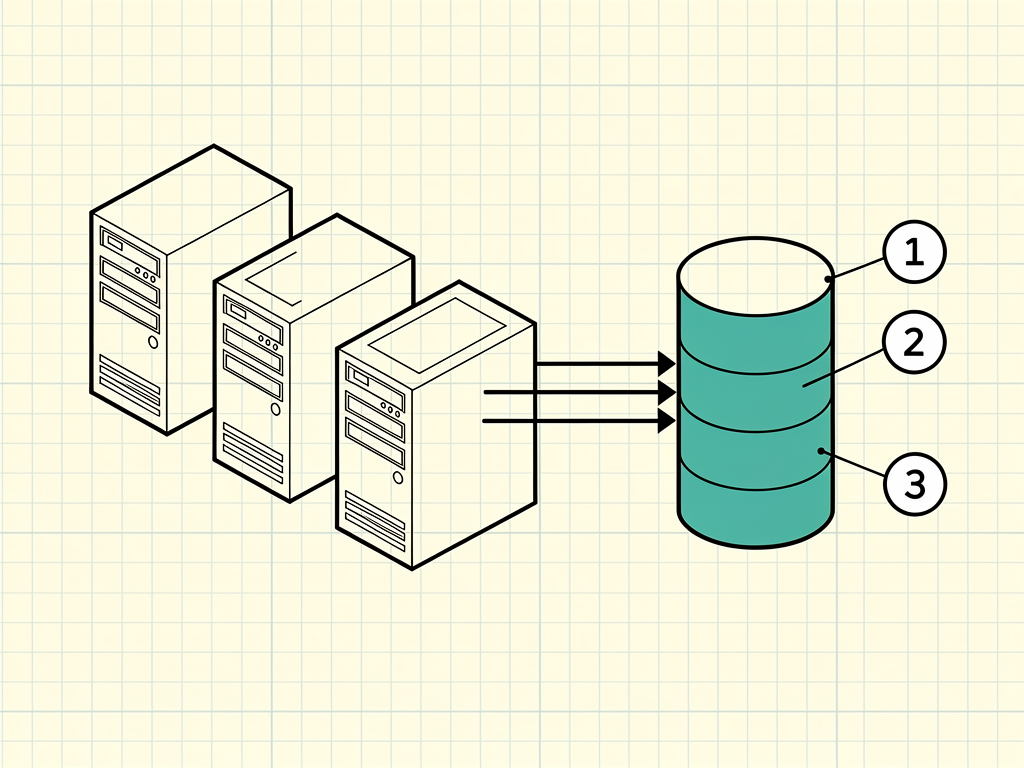
Networking engineers have separated packet-forwarding work from traffic decisions for decades. Kubernetes uses the same split: its API server and scheduler make decisions, while kubelets carry them out. An AI control plane applies that pattern to LLM traffic. The data plane is the HTTPS request carrying a prompt to a model and the response returning to the caller. The decision layer evaluates that request before it proceeds: who authorized it, which model route is permitted, which policy version applied, and what record must survive the decision.
TL;DR
An AI control plane is the decision layer for routed LLM traffic. It receives identity and request context from the application, evaluates policy, selects an allowed model route, and records the outcome. The data plane carries the prompt and completion. A useful architecture keeps the decision and evidence path independent of the application that sent the request.
Control plane and data plane, applied to AI
In a plain LLM integration there is no separation. The application uses an API key to post a constructed prompt to api.openai.com. Decision and execution live in the same process. Whatever policy exists is a few if statements in application code, and the only record is whatever that same code chose to log.
An AI control plane pulls the decision out of the application and into a dedicated layer that every request passes through. The prompt still travels to the model on the data plane. The inline policy layer evaluates who is asking, their role, the data the prompt carries, and which model they are permitted to reach before the request continues.
The request path has four visible hops. An authenticated user or agent sends request context to its application. The application sends the HTTP model request, including the verified caller context it is responsible for supplying, to the inline control plane. That layer evaluates authorization and classification, then records its enforcement decision. An allowed request continues to the selected LLM endpoint while the decision record is written to the independent audit sink.
AI control plane architecture
The phrase can describe more than a dashboard. A dashboard may show model inventory and spend, but it does not make the request-path decision. Here, an AI control plane means the policy and evidence layer that governs HTTP traffic already routed through it. The surrounding application still authenticates its user or agent, the model provider still serves inference, and a tool endpoint keeps responsibility for authorizing tool calls or local execution.
That boundary matters for agents. An agent control plane can govern delegated authority for a model request when the agent supplies a verified principal and the request traverses the proxy. It cannot establish permission for a database query, shell command, or MCP tool call that never crosses the LLM HTTP path. AI agent identity explains the identity handoff that this architecture requires.
The four components
A working AI control plane has four parts, and each maps to a question the plain integration cannot answer on its own.
Identity context
The control plane needs to know who is behind a request. A static service credential identifies the calling application, not the human or agent acting through it. The control plane consumes caller context supplied by the application, including a verified user or agent identifier and its role, so that policy can be written for a specific principal.
Policy decision point
This is the component that evaluates the request and returns pass, block, or redact. A useful policy decision point is deterministic and fails closed: on error or ambiguity it denies rather than defaulting to allow. Policy is expressed as configuration, not scattered through application code.
An illustrative policy can state that the Anthropic route accepts the analyst and engineer roles, blocks PCI or PHI classifications, and denies the request when evaluation returns an error. The important property is a versioned decision that can be retrieved later. A hidden branch in the calling application cannot provide the same evidence.
Routing
Because the control plane sits in front of the model call, it is the natural place to route across providers: send a request to Azure OpenAI or to a self-hosted Llama endpoint based on data residency, cost, or policy. Routing at the control plane keeps model choice out of application code and under governance. The NIST AI RMF frames this kind of context, measurement, and managed response as ongoing AI risk-management work.
Audit sink
The fourth component writes the record. For every decision the control plane commits a per-decision audit record bound to the identity that made the call, to a store the calling application does not control. That write-path independence is what separates an audit trail from an application log.
Why the separation is the point
Keeping the control plane out of the application buys three properties that an in-process check cannot. The policy lives in one evaluated configuration, while application branches can drift. The audit is independent, because the system making the AI decision is not the system writing its own record, which closes the self-attestation problem where an application both acts and grades its own homework. The layer also governs the HTTP call regardless of the vendor at the other end.
For the request-boundary mechanics and what an auditor reviews in that record, see AI control plane. For an explanation of inline decision timing, see why AI security must be inline. The Kubernetes architecture documentation provides the original control-plane/data-plane analogy in a production system.
DeepInspect
DeepInspect is an AI control plane built on exactly this separation. It runs as a stateless proxy between authenticated users or agents and the LLM APIs they call. The prompt travels the data plane to the selected endpoint. DeepInspect evaluates policy using supplied identity and classification, authorizes the target route before inference begins, and commits a signed per-decision audit record to a store the application never touches.
Because it governs the HTTP call rather than the model, it works in front of OpenAI, Anthropic, Bedrock, Azure OpenAI, Vertex, and self-hosted inference without changing the model. Book a demo today.
Frequently asked questions
- Is an AI control plane the same as an AI gateway?
The terms overlap heavily. "Gateway" emphasizes the proxy that traffic passes through; "control plane" emphasizes the decision and governance layer that the gateway implements. In practice a well-built AI gateway is the enforcement surface of the control plane. The useful distinction is against a plain reverse proxy that only forwards traffic: a control plane makes a policy decision and records it, a forwarding proxy does neither.
- Does adding a control plane slow down requests?
The added evaluation is small relative to the model call. Policy evaluation at the control plane runs in milliseconds, while LLM inference typically takes 500 ms to several seconds. The decision overhead is invisible next to the time the model itself takes to respond, which is why inline enforcement carries no meaningful latency cost.
- Can I build one from a reverse proxy?
You can start there, but the four components are where the work is: attaching identity context, expressing policy as evaluated configuration that fails closed, routing across providers, and writing a tamper-evident audit record to an independent store. A bare reverse proxy forwards the call and logs a line. The control plane properties come from the decision and audit layers you add on top.
- Where does the identity come from?
From the application, which is responsible for authenticating the user or agent and passing that context with the request. The control plane evaluates the identity it is given; it does not invent one. Identity propagation is an application-architecture requirement that works alongside the control plane.