AI Agent OAuth Consent: The Permission Screen Users Never Read and the Blast Radius It Grants

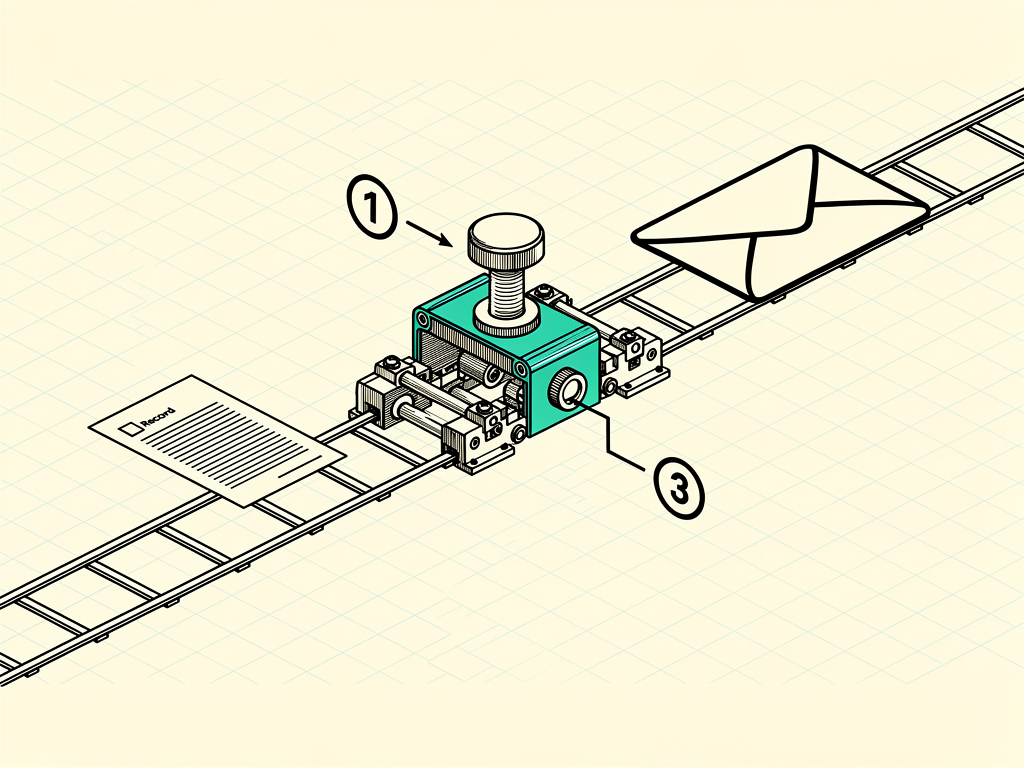
An AI agent that authenticates to a SaaS application via OAuth requests a consent scope from the user. The scope grants the agent standing authorization to call APIs on the user behalf. Users grant scopes they do not read, and the standing authorization outlasts the interaction that produced it. This piece walks through the OAuth consent mechanism, the blast radius it creates, and the inspection-layer controls that constrain the scope after grant.
TL;DR
- OAuth consent gives an AI agent a refresh token that can renew API access without another user interaction, often for weeks or months.
- The granted scope sets the blast radius: mail.send permits sending, while mail.readwrite permits reading and modifying mail.
- A compromised agent or stolen refresh token can use the same standing authorization, and ordinary audit logs may not distinguish legitimate from malicious use.
- Inspection-layer controls reduce exposure by re-evaluating every request, binding consent to sessions, keeping tokens outside the agent, and revoking grants when policy changes.
An AI agent that authenticates to a SaaS application through OAuth 2.0 requests a consent scope from the user. The user sees a permission screen listing the scopes the agent wants: read and write on the calendar, read on the drive, send on the mail. The user clicks Allow. The OAuth authorization server issues a refresh token to the agent. The refresh token grants the agent standing authorization to call APIs on the user's behalf for as long as the token remains valid.
The standing authorization is the pattern that turns a single click into weeks of agent activity. Users grant scopes they do not read. The Zscaler ThreatLabz 2026 AI Threat Report found a 93% year-over-year jump in employees moving enterprise data into AI tools, and OAuth-scoped AI agents are a growing share of the pattern.
I want to walk through the OAuth consent mechanism, the blast radius it creates, and the inspection-layer controls that constrain the scope after the grant.
OAuth consent mechanism
The OAuth 2.0 Authorization Code flow with a refresh token runs in five stages.
The AI agent redirects the user to the SaaS application's authorization server with a scope parameter listing the requested permissions. The consent screen renders the requested scopes.
The user grants consent. The authorization server issues an authorization code and redirects the user back to the AI agent's redirect URI.
The AI agent exchanges the authorization code for an access token and a refresh token at the token endpoint. The access token has a short lifetime (typically an hour). The refresh token has a long lifetime (weeks to months) and can be exchanged for new access tokens without further user interaction.
The AI agent uses the access token to call SaaS APIs. Each API call presents the access token as a bearer credential in the Authorization header. The SaaS application enforces the scope on the API call.
The AI agent uses the refresh token to obtain new access tokens as the current one expires. The refresh token exchange happens without user interaction. The AI agent maintains active API access for the lifetime of the refresh token.
Blast radius
The blast radius of a consent grant is the set of API calls the AI agent can make against the user's account for the lifetime of the refresh token. Three properties of the pattern determine the size of the blast radius.
Scope breadth
The scope granted at the consent step determines the API surface. A mail.send scope grants the agent standing authorization to send mail. A mail.readwrite scope grants standing authorization to read and modify all mail. Users grant the scope the agent requests without reading it, and the agent requests the maximum scope that the workflow could possibly need.
Token lifetime
The refresh token lifetime determines how long the standing authorization persists. Google's refresh tokens are valid for six months of inactivity. Microsoft's default is 90 days. Slack's non-expiring tokens have no lifetime bound. A refresh token issued today is a call-any-API credential a year from now on many platforms.
Delegation preservation
The API call carries the agent's OAuth identity, not the user's. The SaaS application's audit log records the agent as the actor. A downstream reviewer sees the agent's identity and cannot distinguish between a legitimate agent action and a compromised agent action, because both records look identical.
Consent phishing and consent hijacking
Two attack patterns exploit the consent mechanism.
Consent phishing targets the user. The attacker registers a malicious OAuth application, crafts a consent link that appears to originate from a trusted source, and phishes the user into clicking Allow. The user's account is now under the attacker's OAuth grant. The Microsoft Digital Defense Report has documented consent phishing as a growing initial-access vector since 2023.
Consent hijacking targets the AI agent. The attacker compromises the agent's storage layer and exfiltrates the refresh tokens. The refresh tokens are portable and can be used from any client that identifies as the agent. The attacker uses the exfiltrated tokens to call APIs on the users' behalf, and the SaaS application cannot distinguish between the legitimate agent and the attacker's use of the tokens.
Both patterns operate through the OAuth consent mechanism. The consent grant is the trust anchor, and the standing authorization is the amplifier.
Inspection-layer controls
Four controls at the inspection layer constrain the blast radius of the OAuth consent grant.
Scope re-evaluation at the request layer
The inspection layer evaluates each API call the AI agent makes against a policy that includes the calling identity, the target endpoint, and the current context. A consent grant of mail.readwrite does not automatically permit every read and write. The inspection-layer policy narrows the scope by identity, by time of day, by geographic origin, and by the data classification of the target resource.
Session-bound consent
The consent grant is treated as an interaction-scoped authorization, not a standing one. When the interaction ends, the agent's active session terminates, and further API calls require a new authorization step. Session-bound consent reduces the refresh-token lifetime from months to minutes and eliminates the standing-authorization pattern that makes the token portable.
Refresh-token storage at the inspection layer
The refresh tokens are stored at the inspection layer, not in the AI agent's process. The AI agent presents its own identity to the inspection layer, and the inspection layer holds the OAuth tokens against the user's identity. A compromised AI agent process cannot exfiltrate the refresh tokens because the tokens are not in the agent's storage.
Consent revocation on policy change
A policy change that reduces the identity's authorization triggers revocation of the affected OAuth grants. The inspection layer calls the SaaS application's token-revocation endpoint and marks the grant as expired. The revocation propagates within seconds, and the standing authorization terminates without waiting for the user to notice.
The audit record for OAuth agent calls
The audit record for an OAuth-authenticated AI agent call carries three identities: the AI agent's OAuth client identity, the user's identity that granted the consent, and the natural person on whose behalf the current call is being made. The three-identity representation lets the auditor reconstruct the delegation chain.
{
  "identity": {
    "subject": "agent_calendar_bot",
    "principal_type": "agent",
    "on_behalf_of": {
      "subject": "user_ab12cd34",
      "principal_type": "human"
    },
    "roles": ["calendar-scheduler"]
  },
  "request": {
    "provider": "google-workspace",
    "tool_calls": [
      {
        "name": "google.calendar.events.list",
        "arguments_hash": "sha256:1a2b..."
      }
    ]
  },
  "policy": {
    "policy_version": "2026-07-01-1",
    "matched_rules": [
      {
        "rule_id": "calendar-agent-read",
        "effect": "allow",
        "match_reason": "agent identity + user consent + business hours"
      }
    ]
  },
  "decision": {
    "outcome": "allow",
    "latency_ms": 8
  }
}
The record shows the delegation chain end to end. The auditor reviewing an incident that involves the agent can trace which user granted consent, which agent made the call, and which policy state authorized it.
Compliance implications
The EU AI Act Article 26 deployer obligations extend to AI agents that operate on the deployer's data. An agent operating under an OAuth grant is an AI system under the deployer's control, and the deployer is responsible for the events the agent produces.
The NIST AI RMF MAP 3.5 requires the deployer to identify and document the AI system's risks. The blast radius of an OAuth grant is a risk category, and the inspection-layer controls are the mitigation the RMF documentation records.
The OWASP Top 10 for Agentic Applications 2026 lists over-privileged tool access as one of the ten categories. The inspection-layer controls that scope the OAuth grant address the category directly.
DeepInspect
This is exactly what DeepInspect does. DeepInspect sits inline between your users or agents and the SaaS APIs the agents call. The refresh tokens are stored at the inspection layer under the user's identity. Every API call is evaluated against the policy in effect at the moment of the call, and the audit record carries the delegation chain end to end.
The standing-authorization pattern that turns a consent click into weeks of agent activity is constrained at the inspection layer. The scope is re-evaluated on every call. The session is bound to the interaction. The tokens are revoked when the policy changes. The blast radius stays inside the boundary the policy defines.
Book a demo today.
Frequently asked questions
- Does session-bound consent break legitimate long-running agent workflows?
Long-running workflows are supported through explicit session extension, not through implicit standing authorization. A workflow that needs to run overnight requests a session extension from the user at the start, and the extension carries an explicit scope and duration. The pattern preserves the user's visibility into what the agent will do while the user is not watching.
- How does the inspection layer handle OAuth token rotation?
The inspection layer performs the refresh-token exchange with the SaaS authorization server. The AI agent does not see the refresh token. When the access token expires, the inspection layer obtains a new one and continues the call. The rotation is transparent to the agent and to the user.
- What happens if the user revokes the OAuth grant at the SaaS application?
The inspection layer's next token-refresh attempt fails, and the inspection layer marks the grant as revoked. Subsequent API calls from the agent under that user's context return an authentication error. The audit record captures the revocation event and the failed calls that followed.
- Can the inspection layer add scope beyond what the user consented to?
No. The scope of the OAuth grant is the ceiling. The inspection layer can narrow the scope by policy but cannot broaden it beyond what the SaaS authorization server issued. An attempt to call an API outside the granted scope returns a 403 from the SaaS application regardless of what the inspection-layer policy allows.
- How does consent phishing detection work at the inspection layer?
The inspection layer sees the OAuth authorization request originating from the AI agent's client. Requests that originate from unusual client identifiers, unusual redirect URIs, or unusual scope combinations trigger a review. The pattern that distinguishes phishing from legitimate consent is the source of the client identifier, and the inspection layer maintains the allowlist of legitimate client identifiers.
- Does the inspection-layer approach work for OpenAI's ChatGPT Actions and Anthropic's MCP servers?
Yes. Both frameworks use OAuth 2.0 or OAuth 2.1 for user-scoped authorization. The inspection layer holds the tokens against the user's identity, and the frameworks' clients call the inspection layer with their own identity. The scope re-evaluation and session binding apply to both.