AI Agent Kill Switch: A Shutdown Sequence That Actually Stops Work

An AI agent kill switch needs a defined shutdown sequence across intake, model routes, delegated credentials, tools, workers, and queued work. This guide turns that sequence into an engineering control with named owners, activation thresholds, preserved evidence, and a restart gate.
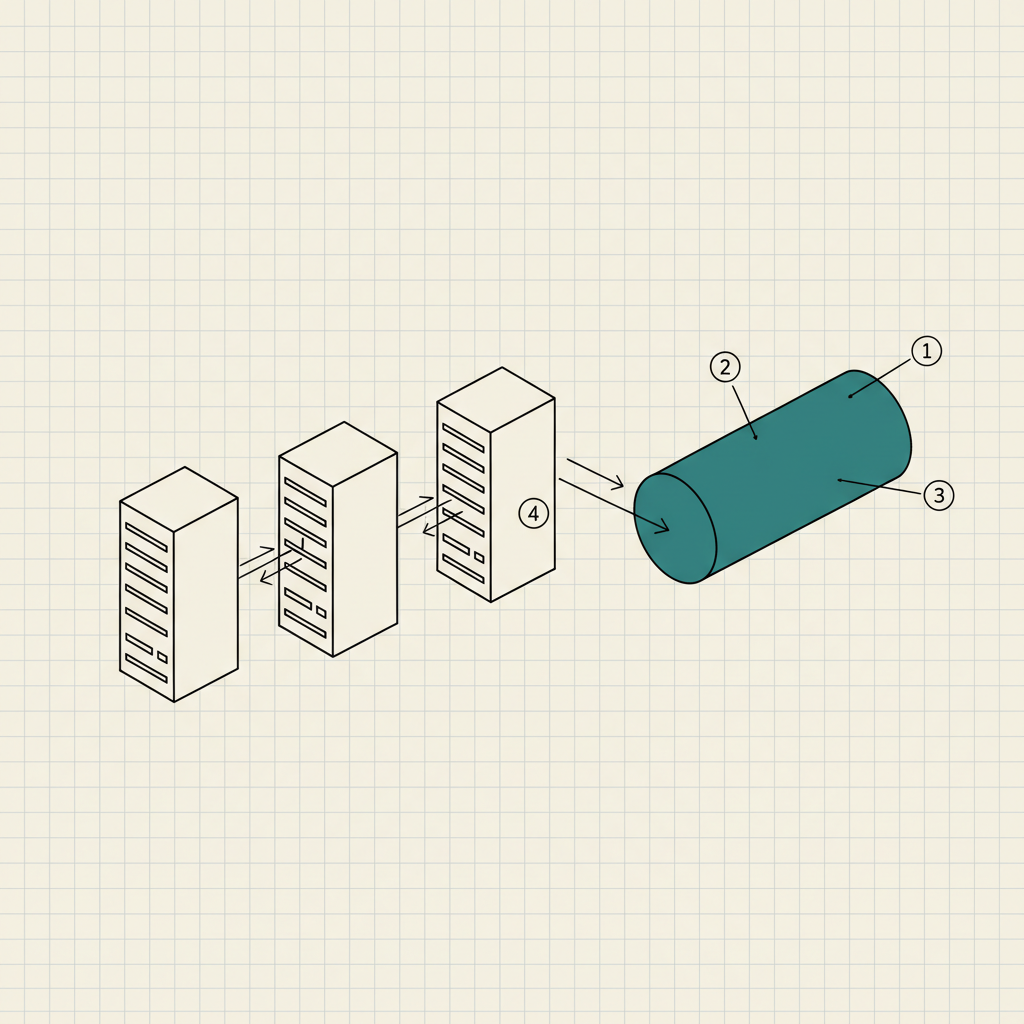
An AI agent kill switch has to stop new work, interrupt work already running, revoke the authority behind tool calls, and preserve enough evidence to explain the shutdown. A red button in an operations console usually controls one of those paths. The other paths keep moving through queues and cached credentials. Retry workers and direct model routes remain active. I treat the kill switch as an ordered containment procedure with a measurable completion condition: the agent can no longer create external effects.
TL;DR
- An AI agent kill switch is an ordered containment procedure covering intake and model routes. It also covers delegated credentials, tool access, workers, retries, and queued work.
- Activation needs named authority and measurable thresholds. A target shutdown time must be established before an incident.
- The shutdown record should preserve who activated it and which controls fired. It should also preserve what work remained and proof that later action attempts failed.
- An HTTP gateway can deny routed model traffic. Process termination, local tools, queue control, and credential revocation need adjacent systems.
An AI agent kill switch needs a stop condition
The engineering team should define "stopped" in observable terms. For an agent that reads support tickets, queries a customer database, drafts replies, and sends approved messages, the stop condition covers every action path. Database credentials and messaging credentials become unusable. Retry workers remain paused, and queued drafts cannot leave the system.
The official NIST AI RMF Playbook calls for assigned responsibilities and mechanisms to supersede, disengage, or deactivate AI systems whose outcomes conflict with intended use. Its Manage guidance also asks organizations to set incident thresholds and account for upstream and downstream consequences. They must preserve material for forensic review and define criteria for redeployment.
That is a stronger requirement than a user-interface control. My blunt view is that a button without a written stop condition is theatre. It may turn one service grey on a dashboard while seven queued jobs keep their credentials and finish normally.
The shutdown sequence closes six paths
Order matters because an agent can create fresh work while operators dismantle its permissions. Start by rejecting new task intake at the application boundary. Next, deny the agent's approved model routes so running workflows cannot obtain another inference result. Pause workers and retries after the route deny has propagated. Quarantine queued tasks instead of deleting them, since their payloads may explain what triggered containment.
Then revoke delegated credentials and tool-specific tokens. The AI agent identity pattern makes this tractable by separating the agent workload identity from the person who authorized a task. A shared API key forces responders to choose between leaving the agent active and breaking every workload that shares the secret.
Finally, terminate isolated execution environments and block outbound effects at the systems that own them. Database authorization owns database writes, and the mail service owns email delivery. The host or sandbox owns local subprocesses. The model gateway cannot terminate a local process that never crosses its HTTP boundary.
Activation authority belongs in the runbook
A production kill switch needs at least two activation paths. The incident commander uses the normal path after confirming a threshold. A tightly controlled break-glass path covers the case where the application console or primary identity service is degraded. Both paths should write to an evidence store outside the agent's custody.
Thresholds should describe outcomes and control failures. Examples include an attempted action outside delegated scope or repeated access to a denied data class. A destination outside the approved route set or evidence that the agent continued after a revocation event should also trigger review. The tool-permission control model helps teams place those thresholds at the authorization layer that sees the proposed action.
Avoid a single anomaly score with an undocumented cutoff. Security operations needs the policy identifier and observed event. It also needs the affected agent identity and decision that authorized shutdown. Legal and service owners may need to join for customer-facing effects, but an approval chain that takes forty minutes defeats containment. Pre-authorize the on-call incident commander for defined thresholds.
Evidence proves the agent stopped
The kill-switch event should create a timeline before responders restart anything. Record the activating identity and reason code. Preserve the incident identifier and policy version. Record the affected agent and session IDs, along with queue depth and worker state. Preserve which credentials were revoked, which routes were denied, and the result from each control plane. Keep failure responses from post-shutdown probes as proof of containment.
NIST SP 800-61 Revision 3 places incident response inside cybersecurity risk management and connects preparation with detection. It also connects response with recovery. Its official incident response publication supports treating evidence capture and recovery as part of the response design rather than paperwork added after service restoration.
Run a tabletop with a clock visible. At 10:14 a.m., inject a task that asks the test agent to export a customer record to an unapproved destination. Activate containment, then attempt one model call and one tool call. Follow those with one queued retry and one fresh task. The test passes only when each attempt produces a denial or remains quarantined, with matching timestamps in the incident record.
Restart requires a fresh authorization decision
Restarting the worker process should never restore every permission it held before containment. The incident owner first identifies the failed control and documents the repair. Engineering rotates affected credentials, reviews quarantined tasks, and clears unsafe retries. Security then verifies the agent identity and route policy. It checks tool scopes and destination restrictions against the repaired configuration.
Restart through a staged return sequence. A single test identity and a restricted task class come first. The agent runs with external effects disabled while teams inspect model requests and proposed actions. Later stages restore individual capabilities under explicit approval. The AI incident response runbook provides the wider sequence for correlation and containment, followed by investigation and recovery.
The NIST Manage guidance asks for redeployment criteria after bypass or deactivation. Write those criteria before the incident. Record the root cause and test the policy fix. Rotate affected credentials and pass the regression case. Retain the evidence and name an owner who accepts residual exposure. A restart without that gate turns the kill switch into a pause button.
DeepInspect
DeepInspect provides one enforceable step in the shutdown sequence. At the AI request boundary, it can deny routed HTTP model traffic according to agent identity and role. The decision also considers route, data classification, and policy. Each decision produces a record that gives incident responders the caller and policy version. It also records the destination, timestamp, and outcome.
The kill-switch orchestrator still owns worker control and queue quarantine. It also owns credential revocation, tool containment, and sandbox termination. DeepInspect supplies the model-route denial and independent request evidence, then lets those surrounding systems prove the agent has lost the rest of its authority.
Book a technical deep dive at deepinspect.ai.
Frequently asked questions
- Can one API endpoint act as the kill switch?
One endpoint can orchestrate the sequence if it calls independent control planes and verifies their results. The first action denies new intake and disables approved model routes. Workers then pause while queued tasks move into quarantine. Credential revocation and requests to tool-owning systems close the remaining paths. Its completion response should identify confirmed and failed actions, with timed-out actions listed separately. Returning HTTP 200 after changing one database flag gives responders false confidence.
- Should the kill switch delete queued work?
Quarantine is safer during investigation. A queued task may contain the injected instruction and retrieved document. It may also preserve the destination and authorization context that explains the incident. Preserve it under restricted access and prevent workers from claiming it. Deletion can follow the organization's retention policy after investigators capture the required evidence and legal owners approve disposal.
- What can an AI gateway stop?
An AI gateway can deny authenticated HTTP requests deliberately routed through its policy point. That covers approved model calls and the responses returning over those routes. It cannot revoke a cloud role or terminate a local subprocess. It also cannot pause a message queue or block a tool call that bypasses the gateway. Each adjacent control plane needs its own containment action.